
What’s worth knowing in the Squarespace world.
For designers, developers, and people building businesses around Squarespace.
How I’d Actually Build a Squarespace Template Business Now
I wouldn’t start by asking, “What niche should I make templates for?”
That sounds practical, but it usually leads to shallow ideas: templates for coaches, therapists, photographers, consultants, course creators, and personal brands. Those can all be real markets, but the category alone is not enough.
A template business does not work because you picked a niche.
It works because you understand a moment.
Someone is starting a private practice and needs to look credible before referrals start coming in. Someone is launching a retreat and needs a sales page that can take deposits. Someone is leaving an agency job and needs a portfolio that makes them look established before they feel established. Someone has outgrown their DIY site but cannot afford a custom build yet.
That is where the opportunity is.
The template is not the product by itself. The product is the shortcut from “I don’t know how to present this” to “I can finally put this in front of people.”
That is the first thing I’d get clear on.
The $100k math matters
A $100,000 template business sounds clean until you do the math.
At $197 per template, you need about 508 sales per year.
At $297, you need about 337 sales per year.
At $497, you need about 202 sales per year.
At $997, you need about 100 sales per year.
That means the question is not simply, “Can I make a beautiful template?”
The question is, “Can I create enough trust, traffic, proof, and repeatable demand to sell this many times without custom hand-holding eating the whole business?”
A lot of template businesses fail because they treat the template like a design product when it is really a distribution, trust, support, and positioning business.
I’d build one template around one buyer moment
I would not start with five templates.
I would start with one.
One buyer.
One transition.
One problem.
One promise.
For example, not “Squarespace template for coaches.”
That is too broad.
Something closer would be:
A Squarespace template for a consultant leaving corporate who needs to look established enough to sell a $5k advisory offer.
Or:
A Squarespace template for a therapist opening a private practice who needs a calm, trustworthy site that makes referrals easy.
Or:
A Squarespace template for a retreat host who needs to explain the experience, answer objections, and collect deposits.
The more specific the buyer moment, the easier the template is to design, name, explain, sell, and support.
I’d sell the path, not the pages
Most template shops sell pages.
Homepage. About. Services. Contact. Blog.
That is fine, but it is not enough.
The buyer is not really buying pages. They are buying relief. They want to know, “Will this help me get my thing online without making me feel lost for three more weeks?”
So I’d make the template feel like a guided path.
Here is what to put on the homepage.
Here is what your services page needs to answer.
Here is where the testimonial goes.
Here is how to explain your offer.
Here is what to remove if you are not ready yet.
Here is how to launch with the simplest version.
That guidance is part of the product.
A good template is not just designed well. It helps the buyer make better decisions.
I’d build proof before I tried to scale
Before trying to hit $100k, I’d want to know whether real people can use the template successfully.
I’d probably sell the first version manually.
Find 5–10 people in the target market. Offer it at an early price. Watch where they get stuck. See what they change. See what questions they ask. See whether the template actually gets them closer to launching, selling, booking, or presenting themselves clearly.
Those first users are not just customers. They are research.
Their questions become your documentation.
Their objections become your sales page.
Their before-and-after examples become your proof.
Their stuck points become your next product improvement.
That is how the template gets sharper.
I’d choose distribution before creating more products
The mistake is making more templates before you know how one template sells.
I would rather have one template with a clear buyer, strong proof, a good sales page, a helpful setup guide, and one dependable traffic channel than ten templates sitting in a shop with no path to discovery.
For Squarespace templates, that path might be SEO. It might be Pinterest. It might be YouTube walkthroughs. It might be partnerships. It might be an email list. It might be a marketplace.
But I would not pretend “multi-channel marketing” is a strategy.
One channel first. One clear buyer. One clear reason to care.
Then expand.
The real business is not the template
The real business is the system around the template.
The sales page.
The demo site.
The setup guide.
The launch checklist.
The support process.
The follow-up emails.
The examples.
The proof.
The upgrades.
The adjacent products.
That is where the business starts to compound.
A template can be copied. A real understanding of the buyer is much harder to copy.
So if I were building a Squarespace template business now, I would not begin with the question, “What kind of template should I design?”
I would begin with:
Who is trying to get to the other side of a specific business moment, and what would make that path easier?
That is where the product is.
17 Best Squarespace Plugins for eCommerce
Squarespace makes it easy to launch a clean online store.
But once you start trying to improve product pages, reduce friction, increase average order value, or make the shopping experience feel more polished, you may run into a few limits.
That is where ecommerce plugins and extensions can help.
The right plugin can help you:
- Improve product selection
- Show better product media
- Create urgency
- Display related products
- Add stronger navigation
- Improve product filtering
- Collect reviews
- Show social proof
- Connect your store to other sales channels
But before you install anything, start with the built-in Squarespace commerce features.
Start With Native Squarespace Commerce Features
Some ecommerce features that used to require plugins are now built into Squarespace.
Before adding third-party tools, check whether you can already enable:
- Customer reviews
- Product waitlists
- Product add-ons
- Limited availability labels
- Variant images
- Related products
If Squarespace’s native feature does exactly what you need, use it.
Use plugins when you need more control, better presentation, or functionality Squarespace does not provide natively.
1. Sync Product Variant Images

Squarespace supports variant images natively, but some stores need a more connected variant image experience.
If a customer chooses a color, size, fabric, or design, the product images should match that choice clearly. When the image gallery and selected variant feel disconnected, customers can second-guess what they are buying.
The Sync Product Variant Images Plugin gives you more control over how product images and selected variants work together.
Use it to:
- Change product images based on selected options
- Sync image clicks and variant selections
- Improve Quick View behavior
- Group thumbnails by selected option
- Reduce confusion on product pages with multiple variants
Best for: apparel, accessories, beauty, home goods, art prints, fabric, wallpaper, jewelry, and any product where the visual option matters.
View Sync Product Variant Images
2. Product Color/Image Swatch Variant Plugin

Dropdowns work, but they are not always the best way to sell visual products.
If a shopper is choosing between colors, patterns, textures, or fabrics, visual swatches are much clearer than text labels alone.
The Product Color/Image Swatch Variant Plugin lets you replace plain variant dropdowns with color or image swatches.
Use it for:
- Color swatches
- Fabric swatches
- Pattern choices
- Texture options
- Style selections
- Material choices
This pairs especially well with the Sync Product Variant Images plugin because one helps customers choose visually and the other helps the image gallery respond clearly.
Best for: clothing, textiles, home decor, jewelry, wallpaper, prints, beauty products, and handmade goods.
View Product Color/Image Swatch Variant Plugin
3. Product Gallery Video Plugin
Photos show what a product looks like. Video can show how it feels, moves, works, fits, or gets used.
Squarespace lets you add video and extra content through product page sections, but sometimes you want the video to live directly inside the product media experience.
The Squarespace Product Gallery Video Plugin lets you add video to the product gallery area so shoppers can see demos, movement, texture, scale, or use cases without hunting for the video lower on the page.
Use product videos for:
- Product demos
- Fit checks
- Unboxing videos
- Texture or material closeups
- How-it-works clips
- Before-and-after examples
- Customer testimonials
Best for: apparel, fitness products, skincare, handmade goods, digital products, tools, equipment, and higher-consideration purchases.
View Product Gallery Video Plugin
4. Squarespace Show Inventory Plugin
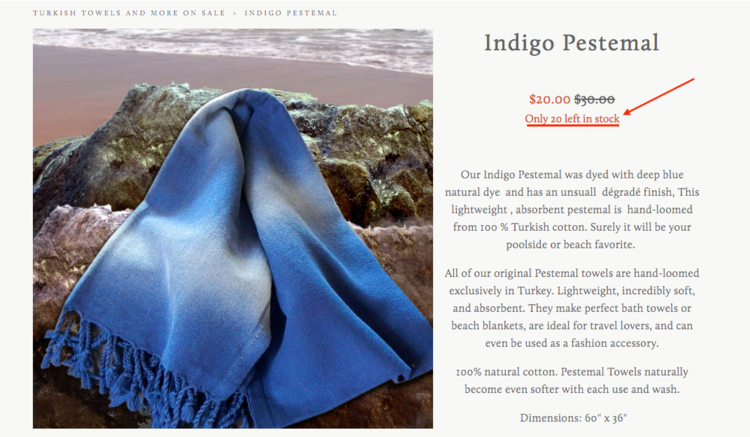
Squarespace has native limited availability labels, which are useful when you want to show that an item is low in stock.
But sometimes you want to show the actual number left.
The Squarespace Show Inventory Plugin displays the quantity left in stock for a selected product or variant.
This is useful for honest urgency, especially when the exact number matters.
Examples:
- Only 2 left
- 3 spots remaining
- 5 prints available
- Last one in this size
This works best when scarcity is real. Do not use urgency just to pressure people. Use it to give shoppers useful buying context.
Best for: limited-edition items, handmade products, small-batch releases, event tickets, workshops, prints, product drops, and inventory-sensitive stores.
View Squarespace Show Inventory Plugin
5. Lightbox Anything Plugin

Some product information is important, but too much of it can clutter the page.
A size chart is a perfect example. Shoppers need it, but not everyone needs to see the full chart immediately.
The Lightbox Anything Plugin lets you open custom content in a popup from a button, image, text link, gallery item, or other trigger.
Use it for:
- Size charts
- Product comparison tables
- Shipping details
- Ingredient lists
- Care instructions
- Fit guides
- Warranty information
- Custom order forms
- Video demos
- Lead capture forms
This is one of the easiest ways to keep the product page clean while still giving shoppers the details they need.
Best for: apparel, beauty, supplements, home goods, custom products, digital products, courses, services, and stores with lots of product detail.
6. Related Posts and Products Plugin

Squarespace has native related products, and for many stores, that may be enough.
But if you want more control over how related content appears, the Related Posts and Products Plugin is worth considering.
You can use it to show:
- Related products
- Related blog posts
- Related tutorials
- Related case studies
- Related collections
- Content based on categories or tags
This is helpful when your product education and your blog content work together.
For example, a skincare shop could show related products and a “How to Use This Product” article. A digital product shop could show a related template, tutorial, and case study.
Best for: ecommerce sites with blog content, product education, tutorials, bundles, or category-based shopping paths.
View Related Posts and Products Plugin
7. Mega Menu Plugin
If your store has a lot of categories, your navigation matters.
A simple dropdown may be fine for a small shop, but once you have collections, product types, gift guides, sale pages, resources, and featured categories, a mega menu can make the shopping path much easier.
The Squarespace Mega Menu Plugin lets you create larger, more visual dropdown navigation for your Squarespace site.
Use a mega menu for:
- Product categories
- Collections
- Gift guides
- Featured products
- Seasonal categories
- Sale pages
- Customer resources
- Wholesale or stockist links
This is especially useful when customers need help finding the right part of the store quickly.
Best for: larger stores, fashion brands, home goods shops, product catalogs, multi-category stores, and stores with content plus commerce.
8. Universal Filter Plugin
Squarespace categories and tags are useful, but large stores often need better filtering.
The Universal Filter Plugin from SquareWebsites lets shoppers filter collection content, including product collections, by different criteria.
Use filters for:
- Category
- Tag
- Color
- Size
- Product type
- Price range
- Collection
- Availability
This is useful when shoppers know what they want and need a faster way to narrow the store.
If your store only has ten products, you may not need advanced filtering. If you have dozens or hundreds of products, filtering can make the store feel much more usable.
Best for: large product catalogs, directories, resource shops, apparel stores, product libraries, and stores with many tags or categories.
9. Custom Cart Slide Out
A slide-out cart lets shoppers review their cart without leaving the page.
This can make the shopping experience feel faster and more modern, especially if customers are adding multiple products before checking out.
The Custom Cart Slide Out plugin from SquareWebsites adds a cart drawer to Squarespace and can display after a customer clicks the cart icon or adds a product to cart.
Use a cart drawer if you want:
- A smoother cart experience
- A faster path back to shopping
- A more Shopify-like cart interaction
- Less friction after adding to cart
- A cleaner cart review experience
Best for: stores with multiple-product orders, apparel shops, beauty stores, home goods, product bundles, and shops where customers browse several items before checkout.
10. Custom Order Confirmation Page
The order confirmation page is easy to ignore.
But after someone buys, you have their full attention.
A custom order confirmation experience can help you give customers a clear next step after checkout.
Use it for:
- Thank-you messaging
- What happens next
- Delivery or fulfillment expectations
- Download instructions
- Newsletter signup
- Social follow links
- Referral prompts
- Upsell or cross-sell content
- Customer onboarding
Ghost Plugins has a Custom Order Confirmation Page plugin that lets you create your own custom confirmation page and send customers there after purchase.
Best for: digital products, templates, services, workshops, courses, custom orders, and stores where post-purchase instructions matter.
View Custom Order Confirmation Page
11. Fomo Sales Notifications
Social proof notifications show recent customer activity, such as purchases, signups, or other actions.
Used carefully, they can help shoppers feel like people are actively buying from your store.
Fomo has a Squarespace setup path and can be used to display recent activity on your website.
Use Fomo if you want to show:
- Recent purchases
- Recent signups
- Product interest
- Customer activity
- Real-time social proof
Use this carefully. Fake or excessive popups can make a store feel less trustworthy. Social proof works best when it is real, relevant, and not constantly interrupting the shopper.
Best for: digital product shops, product launches, active stores, event sales, and stores with enough real activity to show.
12. ReferralCandy
If customers already love your products, referrals can turn that satisfaction into a growth channel.
ReferralCandy helps ecommerce stores run referral or affiliate-style programs where customers can refer friends and earn rewards.
Use ReferralCandy if you want:
- A customer referral program
- Affiliate-style rewards
- Post-purchase referral prompts
- Word-of-mouth growth
- Better tracking for referrals
This is not necessary for every store. But if you already have repeat customers, strong word of mouth, or a product people naturally recommend, a referral program can make sense.
Best for: consumable products, beauty, wellness, apparel, gifts, subscriptions, and stores with loyal repeat customers.
13. LitCommerce
If you want to sell beyond your Squarespace store, LitCommerce can help connect your products to other sales channels.
Use it to manage multichannel selling across marketplaces like Etsy, Amazon, eBay, Walmart, TikTok Shop, and other platforms.
This is useful when your Squarespace site is your home base, but your customers also shop on marketplaces.
Use LitCommerce if you want:
- Multichannel product listings
- Inventory sync
- Marketplace order management
- Pricing updates across channels
- A central dashboard for products and orders
Best for: stores expanding to Etsy, Amazon, eBay, Walmart, TikTok Shop, or other marketplaces.
View LitCommerce for Squarespace
14. SEOSpace
Squarespace has built-in SEO settings, but many store owners still need guidance on what to fix.
SEOSpace helps Squarespace users review and improve SEO across their site.
For ecommerce, that can mean better:
- Product page titles
- SEO descriptions
- Image alt text
- Category page SEO
- Internal linking
- Search visibility
If your store depends on organic traffic, SEO is not optional. Product pages need to be clear for customers and understandable for search engines.
Best for: ecommerce stores that want more organic search traffic, product SEO guidance, and a clearer SEO workflow inside Squarespace.
15. Elfsight All-in-One Chat
Some customers need a quick answer before they buy.
Elfsight’s All-in-One Chat widget lets you add live chat options like WhatsApp, Messenger, Telegram, and other messaging channels to a Squarespace site.
Use chat if customers often ask about:
- Sizing
- Shipping
- Custom orders
- Product compatibility
- Wholesale
- Local pickup
- Pre-purchase questions
Only add chat if you can respond. An ignored chat widget creates more frustration than no chat at all.
Best for: higher-priced products, custom products, local businesses, service-based stores, and stores with frequent pre-purchase questions.
View Elfsight All-in-One Chat for Squarespace
16. Countdown Timer
Countdown timers can help when there is a real deadline.
They work best for:
- Product launches
- Flash sales
- Holiday shipping deadlines
- Cart close dates
- Event registration
- Product drops
- Limited-time offers
Do not use countdown timers just to create fake pressure.
Use them when the deadline is real and the customer benefits from knowing it.
Will Myers has a Countdown Timer plugin for Squarespace, and Elfsight also offers a Countdown Timer widget.
Best for: launches, sales, events, digital products, seasonal campaigns, and limited-time offers.
View Will Myers Countdown Timer
View Elfsight Countdown Timer for Squarespace
17. Wiremo Product Reviews

Squarespace now has native customer reviews, so you may not need a third-party review plugin.
Start with the built-in review feature first.
But if you want a more advanced review system, Wiremo is still an option for adding site and product reviews to Squarespace.
Use a third-party review tool if you need:
- More display control
- Advanced review collection
- Review widgets across different parts of the site
- Custom review layouts
- More review management features
The important correction: you no longer need a separate review widget just to show product reviews on Squarespace. Native reviews may be enough for many stores.
Best for: stores that need more advanced review display or collection than Squarespace’s native review feature provides.
Which Squarespace eCommerce Plugin Should You Use First?
Do not start by installing everything.
Start with the biggest source of friction in your store.
If shoppers are confused by variants, start with Product Swatches or Sync Product Variant Images.
If shoppers need more product detail, start with Lightbox Anything or Product Gallery Video.
If shoppers are not browsing enough products, start with Related Products, Mega Menu, or Universal Filter.
If shoppers abandon before checkout, look at Custom Cart Slide Out, clearer shipping/return information, or better product page copy.
If you already have sales and want to grow through other channels, look at ReferralCandy, LitCommerce, or Fomo.
The best plugin is the one that solves the clearest bottleneck.
Final Takeaway
A better Squarespace store does not come from adding random widgets.
It comes from improving the shopping path.
Start with the native Squarespace commerce features. Then add plugins where you need more control, better presentation, clearer product selection, stronger navigation, or more advanced selling tools.
Your store does not need every plugin on this list.
It needs the right next upgrade.
Browse More Squarespace Plugins
Explore tools for product pages, galleries, navigation, blogs, lightboxes, ecommerce, and custom Squarespace layouts.
Squarespace eCommerce Plugin FAQs
Does Squarespace support ecommerce plugins?
Yes. Squarespace supports third-party extensions, widgets, embeds, and code-based plugins that can add extra ecommerce functionality to your site.
Do I need plugins to run a Squarespace store?
No. You can run a Squarespace store with native Squarespace commerce features. Plugins are useful when you need more control over product pages, navigation, filtering, reviews, cart behavior, or multichannel selling.
What is the best Squarespace ecommerce plugin?
It depends on your store. For product pages, the most useful plugins are often Product Swatches, Sync Product Variant Images, Product Gallery Video, Show Inventory, and Lightbox Anything.
Can Squarespace show product reviews?
Yes. Squarespace has native customer reviews. Third-party review tools like Wiremo may still be useful if you need more advanced review widgets or review management features.
Can Squarespace show low-stock messages?
Yes. Squarespace has native limited availability labels. If you want to show exact inventory quantities, use the Squarespace Show Inventory Plugin.
Can I add color swatches to Squarespace products?
Yes. You can add visual color or image swatches with the Product Color/Image Swatch Variant Plugin.
Can I add product videos to Squarespace?
Yes. You can add videos in product page content areas. If you want video inside the main product gallery, use the Squarespace Product Gallery Video Plugin.
Can Squarespace connect to Amazon, Etsy, or eBay?
Yes, with a multichannel selling tool like LitCommerce, you can connect Squarespace products to marketplaces like Amazon, Etsy, eBay, Walmart, and more.
Can I add live chat to Squarespace?
Yes. You can use a widget like Elfsight All-in-One Chat to add messaging options like WhatsApp, Messenger, Telegram, and other chat channels to your Squarespace site.
How to Add Animations to Your Squarespace Site
Animations can make a Squarespace site feel more polished, interactive, and alive.
But they can also make a site feel busy, distracting, or slow if they are used without restraint.
The goal is not to animate everything.
The goal is to use motion to guide attention.
A good animation helps someone notice an important button, understand a transition, explore a gallery, or feel more movement inside the brand. A bad animation gets in the way.
Below are some of the best ways to add animations to a Squarespace site, from native Squarespace settings to no-code plugins and simple CSS effects.
Start With Squarespace’s Built-In Animations
Before you add a plugin, check what Squarespace already gives you.
Squarespace includes built-in site-wide animations that can add subtle movement across your site. Depending on your template and settings, you can use effects like fade, scale, slide, clip, and flex-style animations.
This is the best place to start if you only want a light layer of motion.
Built-in Squarespace animations are useful when you want:
- Simple entrance animations
- A more polished scrolling experience
- Subtle movement without installing anything
- A quick visual upgrade
- Animation that feels native to the platform
If you want deeper control, more dramatic effects, animated text, hover reveals, background motion, or custom transitions, that is where plugins and custom code come in.
Read Squarespace’s guide to site-wide animations
1. Spark Plugin
Spark Plugin is one of the easiest ways to add animations and visual effects to a Squarespace site without writing code.
It includes a library of design, marketing, navigation, and animation customizations. You can use it for hover effects, scroll animations, animated backgrounds, word loops, number counters, animated announcement bars, and other visual upgrades.
Use Spark if you want:
- Hover animations
- Scroll animations
- Animated text effects
- Number counters
- Animated announcement bars
- Background animations
- Moving logo carousels
- A no-code visual interface
Spark is best for site owners and designers who want a lot of animation options in one tool.
It is especially useful when you want small interactive details across a site rather than one single custom effect.
Best for: designers, small business sites, landing pages, portfolios, and brands that want a more polished interactive feel.
Spark Word Loop Example
Word loop animations can make a headline feel more dynamic by rotating through key words or phrases.
This works well in hero sections, landing pages, service pages, and campaign pages where you want to emphasize multiple benefits without rewriting the whole headline.
Spark Hover Reveal Example
Hover reveal effects are useful for portfolios, galleries, product grids, team sections, and card-based layouts.
The visitor hovers over an image or element, and extra text or visual detail appears. It keeps the layout clean while still giving people more information when they ask for it.
2. SquareKicker
SquareKicker is a powerful no-code design extension for Squarespace.
It is not only for animations. It gives you deeper control over layout, spacing, styling, sections, buttons, images, text, and responsive behavior. But its animation tools are a big reason designers use it.
You can create scroll-triggered effects, hover animations, horizontal scrolling sections, section sliders, sticky elements, and more advanced visual layouts.
Use SquareKicker if you want:
- Scroll-based animations
- Hover effects
- Horizontal scroll sections
- Section sliders
- Sticky sections
- More design control without code
- Custom layouts that go beyond native Squarespace
SquareKicker is best when animation is part of a larger custom design system.
If you only need one small animation, it may be more than you need. But if you want to make a Squarespace site feel much more custom, it is one of the strongest options.
Best for: Squarespace designers, agencies, portfolio sites, landing pages, and custom client builds.
SquareKicker Text Reveal Example
Text reveal effects can make cards, images, or portfolio items more interactive.
They are useful when you want the page to stay visually clean at first glance, then reveal more information when someone engages with a section.
SquareKicker Horizontal Scrolling Example
Horizontal scrolling sections can make a long page feel more editorial and immersive.
This can work well for timelines, portfolios, case studies, process sections, featured collections, or any layout where you want the visitor to move through a sequence.
SquareKicker Animated Buttons Example
Button animations are small, but they can make a site feel more responsive.
A button that shifts, lifts, changes, or responds on hover can help reinforce that it is clickable. Just keep the effect subtle enough that it does not distract from the call to action.
3. Ghost Plugins

Ghost Plugins is a large library of Squarespace plugins, templates, components, and copy-paste code solutions.
This is a good option if you do not need a full design suite. Instead of paying for one big tool, you can pick a specific animation or visual effect and add it to your site.
Ghost is especially useful for small enhancements.
Use Ghost Plugins if you want:
- One-off animation effects
- Free Squarespace code snippets
- Small visual upgrades
- Copy-and-paste components
- Simple effects without a large plugin suite
This is the best fit when you know exactly what you need.
For example, if you only want animated links, a hover effect, a moving button, or one small design enhancement, Ghost may be a better fit than installing a larger design extension.
Best for: DIY site owners, designers who want quick snippets, and people who only need one specific effect.
4. Animated Text Effects

Text animations can work well when you want a headline or key phrase to feel more dynamic.
Common examples include:
- Rotating words
- Typing effects
- Text reveals
- Highlight animations
- Sliding headlines
- Fading phrases
- Animated counters
These effects can be useful on hero sections, sales pages, portfolio intros, and landing pages.
But text animation needs restraint.
If the headline is hard to read, the animation is working against the page.
Use text animation when it helps clarify or emphasize the message. Avoid it when it distracts from the message.
Best for: hero sections, landing pages, launch pages, personal brands, and marketing sites.
5. Hover Animations

Hover animations are one of the simplest ways to make a site feel more interactive.
A button can slightly grow. A card can lift. An image can reveal text. A link can underline in a more interesting way.
These are small details, but they make the site feel more responsive.
Use hover animations for:
- Buttons
- Product cards
- Portfolio items
- Blog cards
- Image galleries
- Team cards
- Navigation links
- Featured resources
The main limitation is mobile. Hover effects are designed for mouse interaction, so they do not always translate the same way on phones.
That does not mean you should avoid them. Just make sure the site still works well without the hover state.
Best for: desktop polish, portfolio grids, product grids, buttons, and card-based layouts.
Image Block Hover Example

A zoom-in image hover can help portfolio images, product images, or featured resources feel more clickable.
Just keep it subtle. A small zoom feels polished. A dramatic zoom can feel distracting.
6. Animated Announcement Bars and Buttons

Announcement bars and buttons are good places to use animation because they are already designed to draw attention.
An animated announcement bar can work well for:
- Sales
- Launches
- Event reminders
- Shipping deadlines
- Product drops
- Newsletter calls to action
The key is to make the movement helpful, not annoying.
If the animation makes the message harder to read, simplify it.
Animated Header Button Example

Animated buttons can help important calls to action stand out, especially in the site header or hero section.
This works best when you have one primary action you want visitors to take.
Button Hover Movement Example

A small movement on hover gives the visitor a sense that the button is active and clickable.
This is one of the safest animation types because it only appears when someone interacts with the element.
7. Animated Page Transitions
Page transitions create a smoother experience when visitors move from one page to another.
Instead of the page changing abruptly, the transition adds a fade, slide, reveal, overlay, or loading-style animation.
This can make a Squarespace site feel more polished, especially for portfolios, creative studios, photographers, event sites, and brands that want a more cinematic experience.
Use page transitions if you want:
- Smooth movement between pages
- A more app-like browsing experience
- A polished portfolio feel
- A branded loading or transition effect
- A subtle moment of motion between page loads
Code & Tonic has an Animated Page Transitions plugin for Squarespace. Square Refresh also has a Page Transition plugin.
Best for: portfolios, creative studios, personal brands, agencies, photographers, and high-touch service businesses.
View Code & Tonic Page Transitions
View Square Refresh Page Transition
8. Scroll Animations
Scroll animations trigger as the visitor moves down the page.
They can help a long page feel more alive by introducing sections gradually instead of showing everything at once.
Common scroll animations include:
- Fade up
- Slide in
- Scale in
- Image reveals
- Parallax-style movement
- Horizontal scroll sections
- Sticky sections
- Progress-based movement
Scroll animations are powerful, but they are also easy to overuse.
A good rule: use scroll animations to create rhythm, not noise.
If every single block flies in from a different direction, the page can feel exhausting. Simple fades and subtle movement usually age better.
Best for: landing pages, portfolios, service pages, long sales pages, and visual storytelling.
9. Animated Backgrounds
Animated backgrounds can add energy to a section without requiring the visitor to interact.
You might use:
- Animated gradients
- Moving shapes
- Floating elements
- Subtle video backgrounds
- Background texture movement
- Animated image masks
These can work well in hero sections, announcement areas, launch pages, or brand moments.
But be careful with readability.
If the background is moving behind important text, the text still needs to be easy to read. Motion should support the section, not fight with it.
Best for: hero sections, landing pages, launch pages, creative sites, and brands with a strong visual identity.
10. Simple CSS Animations
You do not always need a plugin.
Some animations can be added with a small amount of CSS.
For example, you can make a button grow slightly on hover:
.sqs-button-element--primary {
  transition: transform 0.3s ease;
}

.sqs-button-element--primary:hover {
  transform: scale(1.05);
}
This kind of simple effect is useful because it is lightweight and easy to understand.
You can also use CSS for:
- Button hover effects
- Image hover zooms
- Link underline animations
- Pulsing icons
- Floating elements
- Simple fades
- Rotating shapes
CSS is best when you only need one or two specific effects and do not want to install a full plugin.
Best for: simple hover effects, lightweight animations, designers comfortable with code, and small custom touches.
When Not to Use Animations
Animations are not always the answer.
Do not add animations just because the site feels plain.
First ask:
- Does this help the visitor notice something important?
- Does this make the page easier to understand?
- Does this support the brand?
- Does this make the interaction feel clearer?
- Does this slow the site down?
- Does this make the mobile experience worse?
Animation should create focus.
If it creates confusion, remove it.
Quick Tips for Better Squarespace Animations
- Use fewer animations than you think you need.
- Keep important text readable.
- Test everything on mobile.
- Avoid animations that delay access to content.
- Use the same motion style across the site.
- Do not animate every section differently.
- Respect users who prefer reduced motion where possible.
- Keep the page fast.
The best animation often feels invisible. It makes the site feel smoother without calling too much attention to itself.
Final Takeaway
Squarespace sites do not have to feel flat.
With the right plugins, visual tools, and code snippets, you can add movement, polish, and interaction to your site.
Use Spark Plugin if you want a broad no-code animation toolkit.
Use SquareKicker if you want deeper design control and more advanced visual layouts.
Use Ghost Plugins if you want small copy-paste effects.
Use a page transition plugin if you want the whole site to feel smoother between pages.
Use CSS if you only need a simple custom effect.
But whatever you choose, remember this:
The animation should serve the page.
Not the other way around.
Want More Squarespace Plugins?
Browse more tools for improving your Squarespace site’s design, navigation, ecommerce experience, galleries, product pages, and blog layout.
Squarespace Animation FAQs
Can you add animations to Squarespace?
Yes. You can add animations to Squarespace using built-in settings, third-party plugins, custom CSS, JavaScript, or design extensions like Spark Plugin and SquareKicker.
What is the easiest way to add animations to Squarespace?
The easiest way is to use Squarespace’s built-in site-wide animations or a no-code plugin like Spark Plugin or SquareKicker. These let you add hover effects, scroll animations, text animations, and other visual effects without writing custom code.
Can I add scroll animations to Squarespace?
Yes. You can add scroll animations with plugins like Spark Plugin or SquareKicker, or with custom code libraries if you are comfortable working with code.
Can I add hover animations to Squarespace buttons?
Yes. You can add hover animations to buttons with CSS or with a no-code plugin. A simple CSS hover effect can make buttons scale, lift, fade, or change style when someone hovers over them.
Are animations bad for website performance?
Animations can hurt performance if they are heavy, excessive, or poorly implemented. Simple CSS animations and well-optimized plugin effects are usually fine. Always test your site on mobile.
Should every Squarespace site use animations?
No. Some sites work better with very little motion. Use animations when they support the message, guide attention, or improve the user experience.
What are the best Squarespace animation plugins?
Some of the strongest options are Spark Plugin, SquareKicker, Ghost Plugins, Code & Tonic page transitions, and Square Refresh page transitions. The best one depends on whether you need a full design toolkit, a single effect, or a site-wide transition.