
What’s worth knowing in the Squarespace world.
For designers, developers, and people building businesses around Squarespace.
Cash on Delivery Workarounds for Squarespace
How to process payment methods with Squarespace
There are many instances where you might want to skip the payment options at checkout to invoice the customer a different way.
There are two solutions that I’ve used to handle this.
1. Using a special discount code
With Squarespace you can auto apply a discount to certain orders. So 100% off would mean your customer doesn’t pay and you can treat that order like COD.
You can also add an option at checkout for COD.
2. Integrating a 3rd party checkout
Another option would be to use a 3rd party checkout like Shopify Lite.
These integrations appear seamless to your end users.

Free Squarespace Templates
This post is currently under reconstruction. Some sections and images may be missing.
Does Squarespace have free templates?
Yes, your Squarespace template is included in your site plan. There are over 200 free templates to choose from.
When you start a site, it defaults to one of the Squarespace 7.1 templates but you can also start with a template from Squarespace 7.0.
Here’s a shortcut to those 7.0 templates.
On 7.0, you choose a basic template family (like Brine, Bedford, Galapagos, or Tremont), and then customize your site within the bounds of that template. Each template family has its own set of unique features, which are only available within that template family. You can see how they compare here.

On 7.1, all templates have access to the same features. The different templates you can choose as starting points are exactly that: starting points. They have different configurations, but you can change between elements at any time.
Of course, at any time, you can change between template families on 7.0, and change elements on 7.1, but changing templates from a 7.0 to a 7.1 site, requires starting from scratch.

Can you design on Squarespace for free?
Free One Page Squarespace Templates
Free Squarespace Blog Templates
Free Squarespace Templates for Photographers
The Pros and Cons of Free Squarespace Templates

First, let's talk about the benefits and drawbacks of free templates. Again, I'm not specifically talking about the default templates that Squarespace offers, though some of these pros and cons apply to those as well.
Pro: They're free.
Nothing beats the price of free. When you're just getting started as a small business or an individual blogger, the budget can be a huge concern. There's no reason to spend money if you don't have to, and there are plenty of free options for Squarespace.

Pro: They make your site look more unique.
As I mentioned up above, one of the main drawbacks of default templates is that a lot of people use them. Free templates have an inherently smaller user base, and thus make your site look more unique than the default templates do.

Unfortunately, that's just about all I have to say in favor of free templates. Now, strap in, and let's dig through the cons.
Con: They typically lack support and documentation.
If you're not a developer, and you don't know your way around custom code, a lot of free templates are going to leave you out in the cold. They might have basic installation instructions, but other than that, you're on your own. If you want to tweak it, if you need help installing it, or if you get errors along the way, well, hope you know someone who can help you figure it out.
Con: You have to DIY the installation.
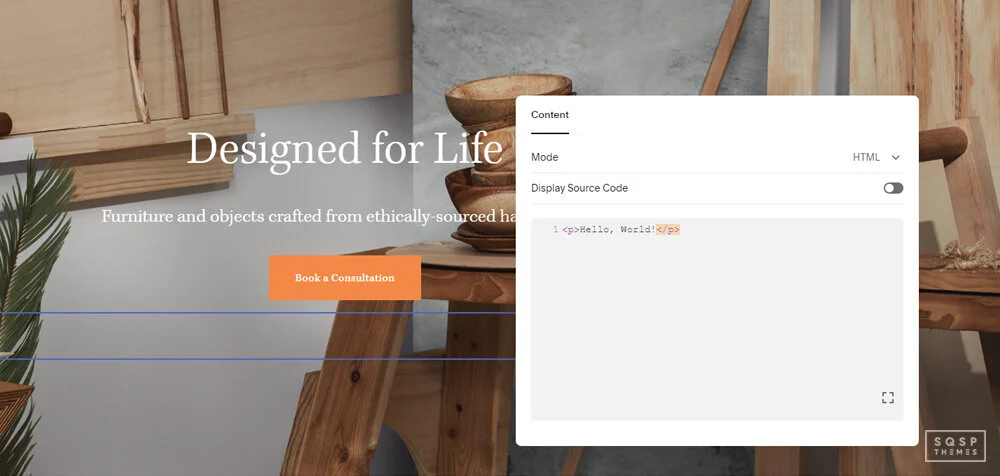
One thing I like that many paid templates and plugins do is offer an automated installation. Essentially, it's a script that starts you on a specific page, and then runs through various menus and inputs the custom code you need for the template. Unfortunately, this has a somewhat high barrier to entry, so free template designers rarely make such a script. Of course, not all paid scripts offer this either.

Con: They might not be comprehensive with styling all elements.
When you use a blockquote on your site, is it styled? When you use a bulleted list, what are the bullet points? There are hundreds of little decisions like this to make when you customize a template, and a lot of free templates don't cover all of the bases. You'd be surprised; I've even seen some that don't uniquely style headings and links!

Should You Go Free, or Paid?
Now, given the name of my site and the fact that paid Squarespace templates, you might think I'm biased. Well, I am, a little, but I genuinely don't think free templates are worthwhile for most people.

If you're thinking about using a default template, that's great! Plenty of small businesses use them, and many successful sites get their start with a default template. I have nothing against them, really, other than the lack of uniqueness inherent in using a default template.
Free templates, meanwhile, tend to be worse in my opinion. They often have gaps in coverage and are generally less well-designed. Some are great! Most of them aren't worth using. Stick with defaults instead, if you aren't willing to pay for a design.
Paid templates cost money, which means many individuals and small businesses aren't going to want to use them. That's fine too! They serve a role for businesses and people with budgets, to set their sites apart from the rest.
The other option, of course, is to hire a developer to create a custom design for you. That's a whole other post, though, so I'll save that topic for another time.
What do you think? Do you agree with me about free and paid templates, or do you have a different perspective? Let me know in the comments. If you have any additional comments, questions, or concerns, feel free to reach out at any time!

How to show off your Squarespace Portfolio
Hey web designers, what do you do about creating your Squarespace portfolio? Here are a few thoughts from us:
Hey Squarespace designers: when you build websites for others, what’s the best way to show them off?
We talk with many Squarespace designers, both freelancers and small agencies that are relatively new in their business and just want to be able to attract steady clients. Your portfolio plays a big role in doing this, so it’s important to get that right.
What sorts of things should you consider? Let’s take a look:
Download our tips for web design portfolios here
Curate your portfolio
Hey we get it, sometimes you feel that you have to show all of your past work in your portfolio, but that can actually work against you. It’s not that you’ve probably got poor examples in your portfolio, but that you’re bound to have projects that you’ve done just to have the work. In other words, those projects weren’t the ideal jobs you want to be doing.
We’ve talked about the idea of an “ideal customer” previously; those clients who are awesome to work with and have the sorts of project needs that you really enjoy taking care of. How do you get those customers? Well, for one thing, you should curate your portfolio so that it shows them related work and gives them a good idea of what you could do for them.
If you put every last project in your portfolio, you run the risk of your ideal customers skipping on by. Not because your work sucks, but because they totally miss the projects that are relevant to them. You dilute your messaging so people become unsure as to whether you’ll be a good fit for them.
Honestly, potential clients don’t spend a lot of time trawling through multiple examples in your portfolio. They’re more likely to scan over a few that catch their eye, so make the top few items count. If you feel you don’t have enough examples of the work you really want to be doing, you could create a mockup or two to use in your portfolio.
Before you post any new project to your portfolio ask yourself; does this show off the work I want to do for ideal customers? “Dress for the job you want!”
Take screenshots
Hoo boy, this we know for sure: if you don’t take screenshots the minute you’ve finished a website, you will, at some point, live to regret it. You don’t need to learn this lesson from experience because seriously, many designers have gone before you and can attest to this!
You pour hours and hours of time into crafting a well-designed website, fixating on each detail and making very intentional choices for graphics, fonts, headlines and images. You make sure you’re following best practices with conversions and usability.
Then you hand it over to the client.
Within a day or two, they’ve “made some tweaks” and added content that doesn’t look great or impacts the usability of the website. When you remember to go back and grab a screenshot, it just doesn’t look like the polished website you handed off.
If you’re in early days building your portfolio and that happens to be an “ideal client” website, you’ll be pretty disappointed to miss taking a screenshot. The website probably won’t be the same again (unless you get your hands on it).
Bottom line - take the screenshot as soon as you’re finished, before you hand the website off!

Source: Squarespace
Choose a portfolio style template
We’ve written about some of our favorite Squarespace portfolio templates here. You can also browse the Squarespace directory for portfolio-style templates to start from scratch.
Use a good portfolio setup
You have a few options with Squarespace when it comes to creating your own web design portfolio. If you’re running 7.1, then portfolio pages are a new feature specifically for that version.
Squarespace describes portfolio pages as “stylized landing pages that link visitors to sub-pages.” It’s as simple as adding a portfolio page from the home menu and selecting your preferred layout. The different layouts available are shown below:
From there, you can style the portfolio section. The basic options include features like spacing, image aspect ratio, hover effects, background and colors. Next, you add sub-pages which is where the content of your portfolio will sit. You can add up to 40 sub-pages (but for a website designer, that’s usually too many!). You can’t move sub-pages to another portfolio page at this stage, so give it careful thought as to how you want it laid out before getting stuck in. One suggestion would be to use one sub-page per project and have a few screenshots on each page.
If you serve more than one industry, you might want to consider multiple portfolio pages. For example, if you serve real estate agents and architects, you might have one page as a “real estate website portfolio” and another as an “architect website portfolio.”
What if you’re running Squarespace 7.0? You don’t have the option to add portfolio pages to every site, but there are multiple templates that have been created with portfolios in mind. For example, the Avenue template features an adapted, grid-based Index Page that allows you to organize your content into thumbnails and titles which click through to individual gallery pages and descriptions.

Another popular option is to use the blog page as a portfolio, either by using a “portfolio” category that can be sorted with a dropdown menu, or by having a separate blog page that is just for your portfolio. This blogpost from Big Cat Creative gives some great ideas, all supported within 7.0 or 7.1 (if you were to choose not to use portfolio pages).
Squarespace designer portfolio examples
It often helps to see what other web designers have done with their portfolios. Here are a few different examples of Squarespace designers:
Kerstin Martin
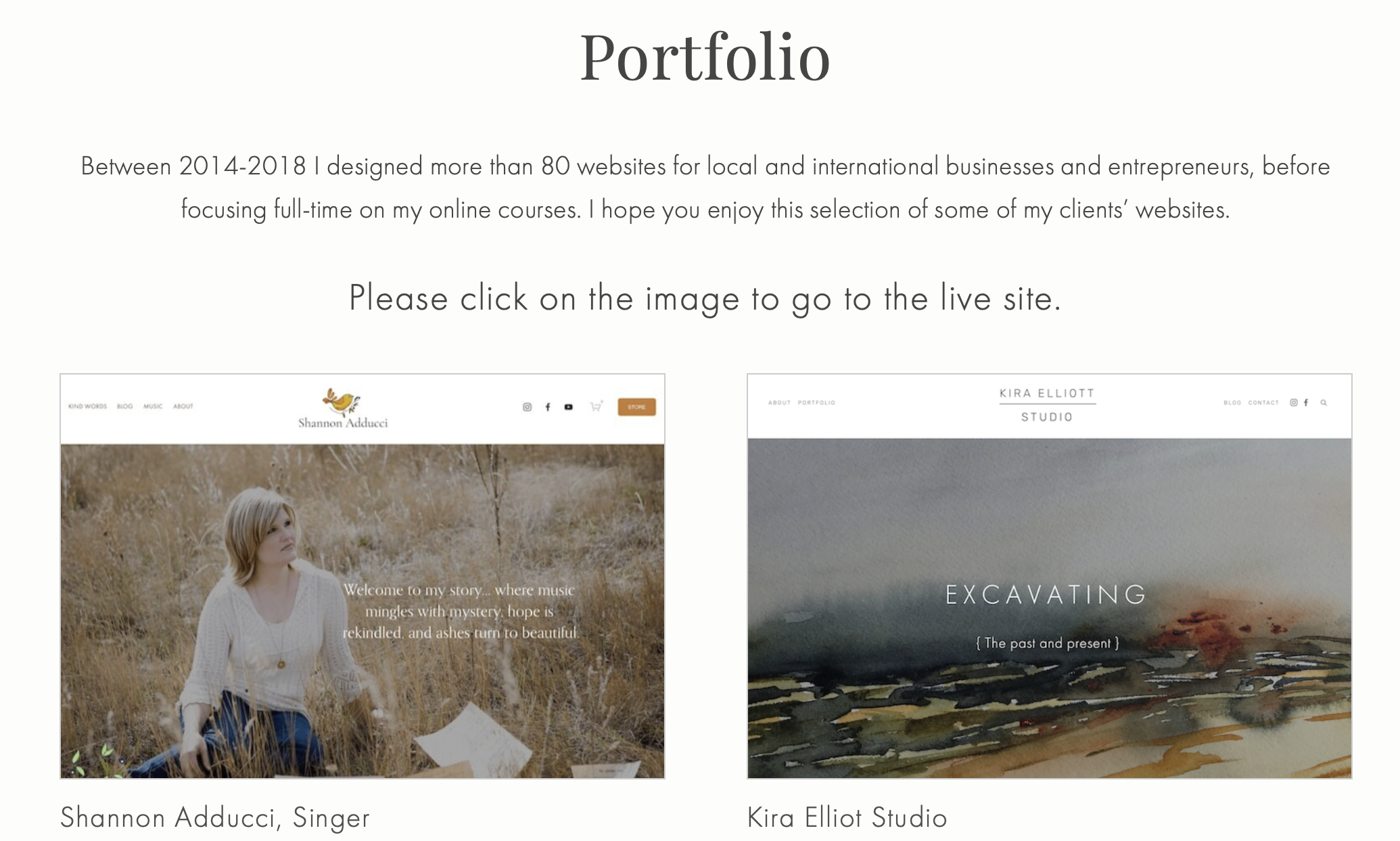
Kerstin focuses more on her online courses these days, but it’s still important that she keeps up a portfolio of her work. People can clearly see that she knows what she’s doing! (Also, check out Omari’s interview with Kerstin, recorded just prior to the COVID pandemic taking hold in the USA. How will Squarespace entrepreneurs be affected?)
Soda Creek Digital
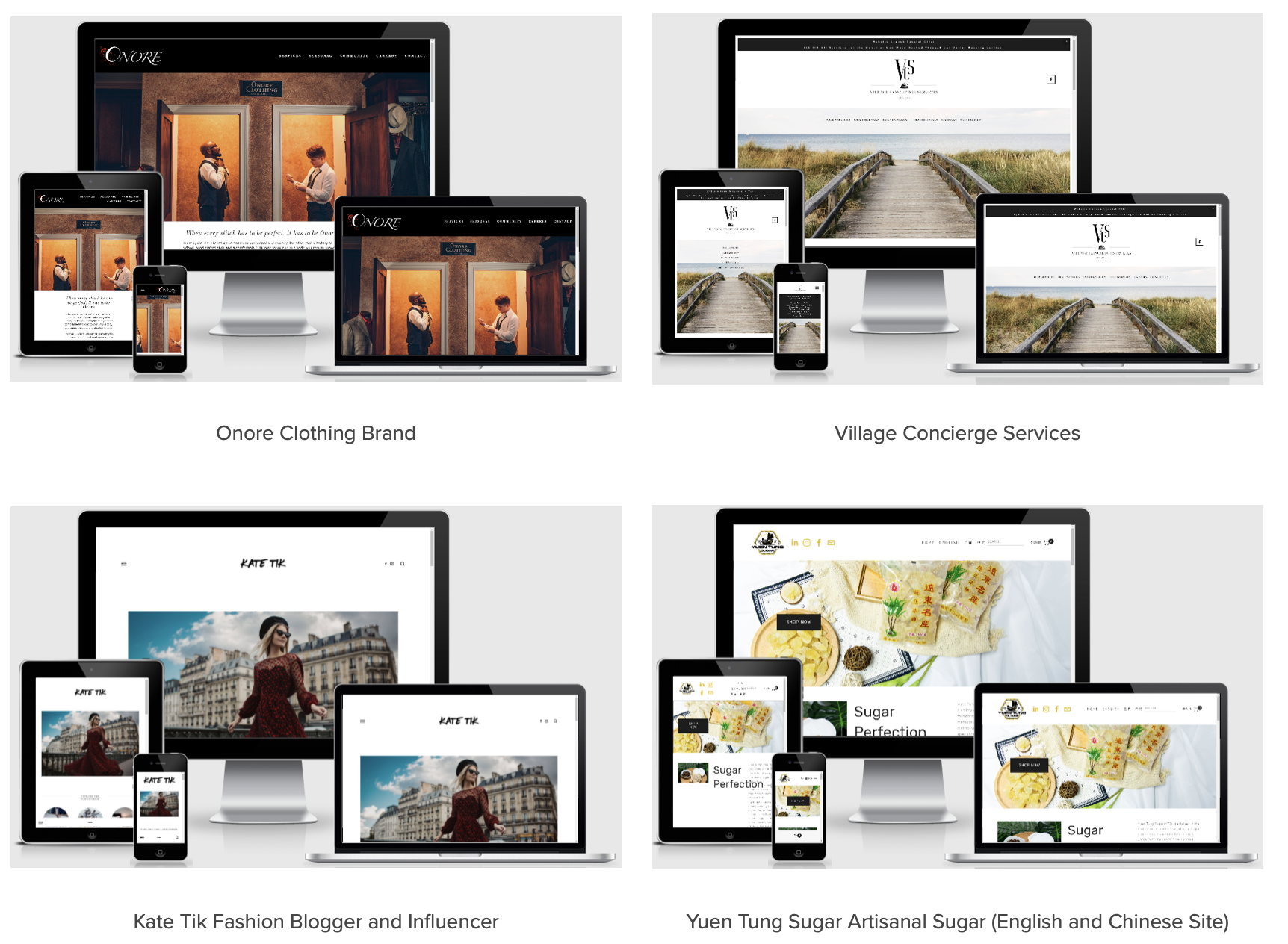
This UK-based design agency is one of Squarespace’s “hire an expert” picks. Their portfolio is quite varied in terms of the clients they serve, but their design, consistently showing sites as they appear on different screens is pretty cool.
Flaco Zacarias
Flaco’s portfolio is an example of a scrolling gallery style, keeping his website design to one page. Anyone interested can click on the linked sites to view the full website. If you were to do something like this, again, we’d suggest just having a few examples as most people won’t view a large slide show.

Christy Price
We love the design flare shown in Christy’s portfolio, with the consistency in how she presents the featured images for each project. She also limits her portfolio to 12 examples, so it’s not too overwhelming for a potential client.

Final thoughts
Your portfolio is one of the most important marketing tools for drawing in new clients. Make it a thoughtful, feature piece with a handful of examples of your best work for the clients that you really want to work with.
It’s totally okay to not put every project in your portfolio, even if you actually enjoyed working with the client. They might not represent what you really want to be doing, so it doesn’t make sense to add their project as an example.
Lastly, think about how your portfolio is organized. Does it clearly state who you want to work with? Is it easy for the client to look through? Make your portfolio a showcase to be proud of.