
What’s worth knowing in the Squarespace world.
For designers, developers, and people building businesses around Squarespace.

What Makes a Customer Buy? Optimizing Your Squarespace Website to Convert
How can we create an optimal Squarespace website? For many, that means encouraging customers to buy. Here’s what you can do to improve those conversions:
Most people don’t need more traffic — they need fewer reasons to bounce.
You’ve got something worth paying for. Maybe it’s a product, maybe it’s a service, maybe it’s a combination of both. But the moment someone lands on your site, the clock starts ticking. Not just to grab their attention — but to hold their trust.
And that’s where most Squarespace sites fall short.
Not because the template is wrong. Not because your offer sucks. But because your site has small leaks in trust, clarity, and usability. Death by a thousand friction points.
Let’s walk through where people fall off, and how to fix the stuff that’s quietly costing you.

1. Confusion = Exit
If your visitor has to stop and think, you’ve already lost them.
Most websites fall into the same trap: trying to be clever instead of clear. The header says something vague like “Bold design for bold ideas” and the person on the other side is still wondering: “...wait, is this for me?”
They shouldn’t have to scroll twice to figure out what you do, who you serve, or how they can take the next step.
Ask yourself:
Can someone tell what I offer without clicking anything?
Do my nav labels make sense to a stranger?
Is my homepage doing one thing well, or trying to do five things halfway?
Simple wins. Every time.
2. The Experience Feels Like Work
Even if your copy is strong and your offer is solid, your layout can trip you up.
Slow load times. Clunky navigation. Buttons that don’t feel like buttons. Forms that ask for six pieces of info when two would do. It all adds up.
Squarespace gives you the bones — but you still have to wire up the experience like someone who wants people to take action.
If you’re selling something, test it. Pretend you’re a new visitor. Try buying from yourself. Better yet — have someone who doesn’t owe you anything do it. Watch where they pause. Where they scroll too fast. Where they frown. That’s your real analytics.
3. Zero Trust, Zero Sale
People don’t want to be the first to buy. And they definitely don’t want to get scammed.
If your site doesn’t look like a business that delivers, people won’t risk it — no matter how good the product.
Trust can be subtle. But it matters.
Here’s what builds it:
Real testimonials (bonus if they include photos or names)
Product reviews or client logos
A support link that isn’t buried in the footer
A return policy that sounds human
An About page that reads like a real person wrote it, not ChatGPT
High-res images and videos that don’t scream stock
Also? Update your footer year. Nobody trusts a business whose copyright still says 2021.

Get our tips for reducing cart abandonment here
4. Surprise Fees = Cart Abandonment
You ever get all the way to checkout and suddenly see an extra $9.99 slapped on top?
Yeah. Same.
That little “surprise” is one of the fastest ways to lose a sale — especially if someone was on the fence already. The average cart abandonment rate is ridiculous (around 70%), and hidden costs are one of the top reasons why.
If you sell physical goods, make shipping transparent. If you offer services, make the process clear before someone even gets to the booking form. Nobody wants to feel tricked at the end of the journey.
A few things that help:
Flat-rate or free shipping thresholds
Upfront timelines and pricing for services
Clear breakdowns of what’s included (and what’s not)
5. Your Site Looks Good — But It's Not Selling
Squarespace makes it easy to make a site look polished. But looking good isn’t the same as converting.
Your design needs to do something. And most of the time, that “something” is guiding people to take a next step — book a call, buy a product, join a list, download the thing.
If your site is gorgeous but nobody clicks, that’s a problem.
This is where plugins and subtle UX tools can help. A few worth trying:
Testimonial Slider – Instead of a wall of praise, let it glide across the screen. Cleaner. More believable.
Product Gallery Video – If you’re selling something physical, show it in motion. Static images rarely sell the full story.
Inventory Indicators – A gentle nudge like “Only 2 left in stock” goes a long way.
Wiremo Reviews Integration – Saves you time and displays reviews automatically. No coding. No manual updates.
Hover-to-Zoom or Image Rollover Plugins – Let people get a closer look. Think like a shopper, not just a designer.
None of these fix a broken offer. But they do give your already-good offer a clearer, smoother path to conversion.
What Actually Makes Someone Buy?
It’s not the perfect font. Or the clever headline. Or the flashy promo.
It’s trust. Clarity. Ease.
People buy when they know what they’re getting, feel good about who they’re buying from, and don’t have to jump through hoops to make it happen.
If you’re not getting sales, the fix isn’t always to “drive more traffic.” Sometimes it’s just tightening the path between interest and action.
Cut the fluff. Sharpen the steps. Build trust early. Make it easy to say yes.
That’s it.
Want a second set of eyes on your Squarespace site?
I’ve helped plenty of designers, creators, and shop owners spot the things they didn’t realize were costing them.
[Let’s talk.]
Or if you’re not ready yet, grab the free guide on reducing cart abandonment — small fixes, big difference.

Not Just Another Squarespace Agency
What does it take to make your Squarespace agency stand out? Here are some tips for differentiating and growing your business:
How to Stand Out, Get Noticed, and Get Booked
If you’ve ever scrolled through a dozen Squarespace agency websites, you’ve probably noticed something:
“Beautiful, modern websites.”
“Premium web design services.”
“Helping you build your online presence.”
It all starts to blur together.
The problem? If you sound like everyone else, clients can’t tell what makes you the right choice.
The opportunity? You don’t have to be louder—you just have to be clearer.
In this guide, you’ll learn how to:
Craft a distinct brand and message that clients feel immediately
Specialize in a niche that makes you the obvious choice
Offer more than “just a website” by solving deeper problems
Structure your business and process to build instant trust
Free download: Get our actionable tips on branding your Squarespace agency
You Can’t Afford to Be “Just Another Agency”
Here’s the truth: your clients aren’t looking for a Squarespace site. They’re looking for results.
They want a site that books more calls, sells more products, tells their story, or earns trust.
When your message says:
“We make beautiful Squarespace websites”
...they hear:
“We do what everyone else does.”
But when you say:
“We help therapists book more clients through strategic Squarespace design,”
...you stand out. You’re no longer a vendor—they see you as a specialist.
Niche Down to Stand Out
Specialists are trusted. Generalists are compared.
That’s why choosing a niche is one of the fastest ways to rise above the noise.
You might choose your niche based on:
Industry: wellness, food & beverage, education, e-commerce
Style: bold minimalism, storytelling-focused, luxury editorial
Tech: integrations with tools like MindBody, Acuity, or Shopify
Personal background: maybe you spent years in hospitality—lean into it
The clearer your niche, the easier it is for clients to say: “That’s for me.”
One example of an agency targeting a specific niche of clients is Launch It, Girl. Their target audience is specifically female entrepreneurs that are launching a new business.

Differentiating what you offer
Another great way to differentiate yourself is in what you actually offer. This might be directly related to the niche you have chosen; for example if you specialize in ecommerce stores, one of your offers might be high quality product photography (which every ecommerce business should have!)
Some agencies specialize in certain programs or types of integrations. For example, Pixality Design specializes in websites for yoga and wellness businesses that include integrations with MindBody, the scheduling software. They also offer marketing consulting and done-with-you Facebook and Instagram ad setup. These “extras” are good examples of identifying particular problems that people within the niche may have.
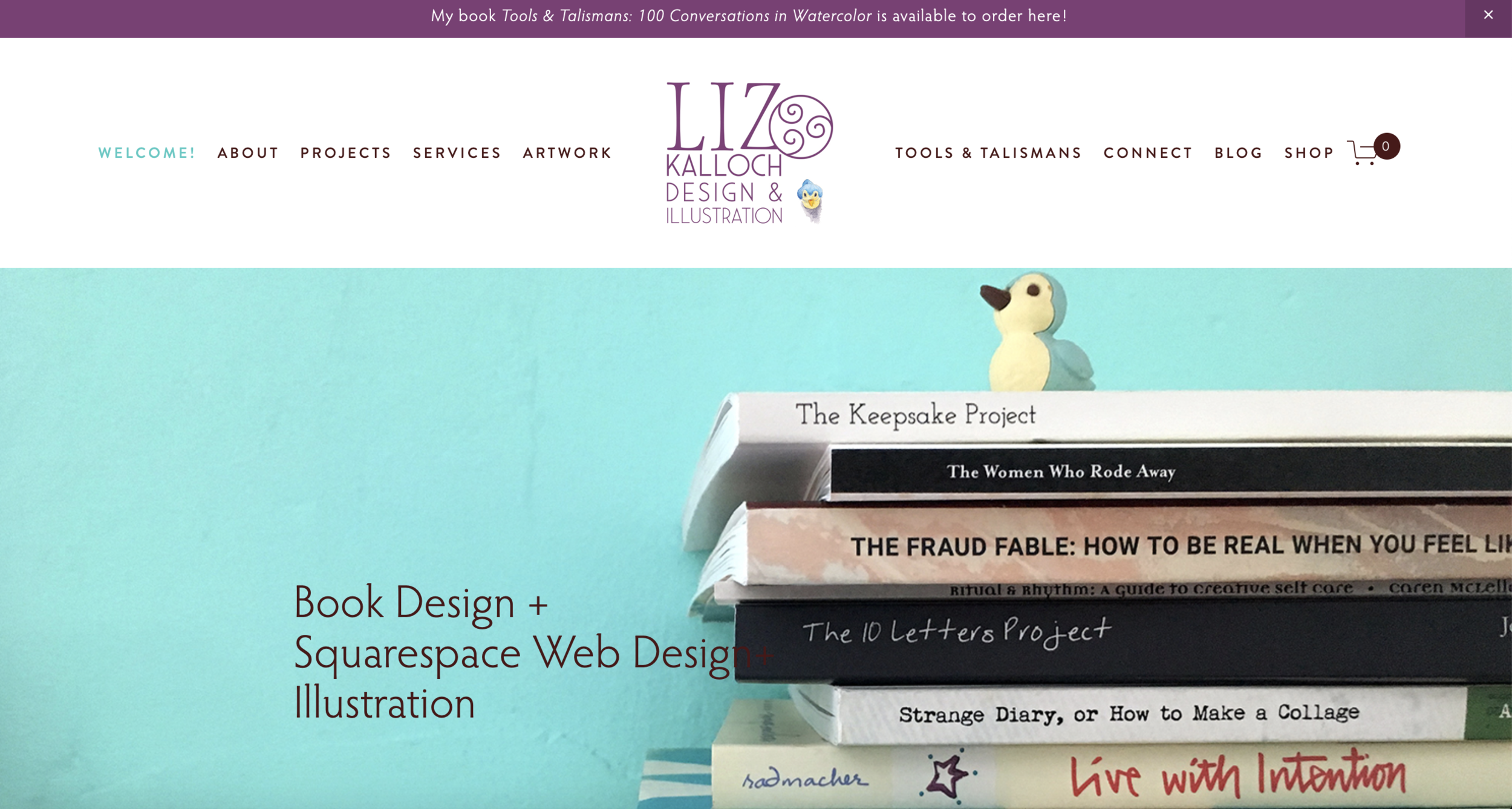
Here’s another great example of choosing a niche and differentiating what is offered; Liz Kalloch Design and Illustration specializes in Squarespace websites, book design, and illustration for writers and other creatives. Kalloch channelled her more than 20 years of experience in illustrating and book design to create a unique agency.
First impressions - Brand Identity
What are you saying and how are you saying it? Many potential clients will first encounter your agency online so your branding needs to be on-point. Bland and boring won’t cut it, you need to get their attention early.

One way of looking at it is that you’re solving a particular problem (or set of problems) for clients. Which two or three things are their biggest challenges? If you can focus your energy into one pressing problem, it’s a great way to differentiate your brand.
So instead of “we make beautiful Squarespace websites,” you might now have “we make Squarespace websites that help ecommerce stores to grow their sales” (or something like that!)
However you choose to differentiate your brand, it’s important that it comes across in a client’s first impressions of your agency website. Most website visitors stick around for less than 15 seconds, so make your point quickly. If people don’t “get it” almost immediately, they don’t tend to search around for more information.
Here’s an example of great differentiation. Website by Tonight actually does what the brand name implies. Not only that, they’ve styled themselves as an agency for agencies, taking care of creating simple client websites for agencies in just a few hours.
Choosing a different way to do business
Sometimes how you run your business can be a differentiator for clients. To be honest, some agencies have helped to create an impression full of red tape, and that producing a final product will take a long time.
How can you stand out to counter this idea? By telling clients how you operate! Clients dislike ambiguity, especially around what they are getting and how much it will cost them. If you have clearly delineated packages, this is a great way to get around that fear. Remember, people may have been burned previously by unexpected costs from a web designer!
So you might:
Explain a step-by-step process that ends with the final website being created. Include how you communicate with clients and what will be needed from them. Our first agency example, Website By Tonight, outlines a 6-step process, including how they get input from clients. They also offer web design via screen share.
Offer specific packages that make you different from others. Our founder here at SQSP Themes, Omari, is a huge fan of the “productized service” model of business. This simply means packaging up some sort of service so that it can be offered as a product would, with clearly defined boundaries.When Omari first started in business, he offered a productized service doing custom CSS tweaks. Instead of offering a one-off service, he bundled it into packages of five or ten Squarespace tweaks. This was a great way to offer a defined service and to do repeat business rather than simply one-offs.
The underlying lesson is that being specific and transparent about what you offer and your process for offering it can help to draw customers in. Everyone knows that a website design project has a beginning, middle, and end, but they want to know exactly what that entails in terms of time, money, and what they get from it.
Download our actionable tips on branding your agency to stand out here
Final thoughts
You’re not “just another Squarespace agency,” are you? We thought not. There are so many ways you can differentiate yourself from the crowd and help to draw in more clients.
It might be in what you offer, how you offer it, how you brand yourself, or the niche that you serve. One thing you should always spend time on is honing that message so it is clear to anyone who visits your website.
We’d love to hear about how your agency defines itself. Drop us a comment below!

Your Blog Isn't Dead — It's Just Sleeping
Are you hoping for more interaction with your Squarespace content? Don’t give up too soon - here are some things you can do:
How to Re-Engage Your Audience and Turn Your Blog into a Client Magnet
You started your blog with big plans. Maybe you had a content calendar, a few high-effort posts, and the hope that consistent publishing would attract your dream clients. You hit publish, waited for the traffic to roll in… and then? Crickets.
The silence is disappointing, but it’s not a death sentence. If your blog has gone quiet, that doesn’t mean it failed — it probably just lost momentum. And here’s the good news: momentum can be rebuilt.
Content marketing still works. It’s one of the most sustainable ways to attract aligned clients, build trust, and showcase your expertise as a Squarespace web designer. The key is knowing how to bring your blog back to life in a way that feels worth the effort — and gets results.
Need quick tips for content promotion? Download ours here
What’s Really Going On With Your Blog?
Before you try to fix anything, it’s worth asking the question: is your blog struggling because of what you’re writing, or because no one is seeing it?
A lot of web designers fall into the same trap. You’re great at what you do, but writing consistent, high-quality content that connects with your ideal client? That’s a skill of its own — and it takes time.
Sometimes the issue is that the content doesn’t speak directly to the pain points of your audience. Other times, it’s not a content problem at all — it’s a visibility problem. Even the most brilliant insights won’t convert if no one’s reading them. And if you’re not actively driving traffic, optimizing for search, or distributing your posts to the right people, your blog’s reach stays small.
It’s also possible that you simply haven’t given your content enough time. SEO doesn’t reward short sprints. It’s a long game. Rankings and engagement can take weeks or even months to build — especially on Squarespace, where the SEO tools are good but not always plug-and-play.
The takeaway here is simple: don’t assume your blog isn’t working just because it’s quiet. It might need clearer positioning, more focused topics, or better promotion — but it’s not beyond saving.
Why Your Blog Still Matters (Especially As a Designer)
When people talk about content marketing, they often focus on traffic and conversions. But as a designer, your blog is more than a lead magnet — it’s a visible extension of your creative point of view.
Think about what you want prospective clients to feel when they land on your site. Do you want them to see you as a technician or a strategist? Someone who executes, or someone who leads? A blog full of thoughtful, useful, well-written content helps them understand what it’s like to work with you — before they even reach out.
It’s also one of the easiest ways to demonstrate your process. A case study, a client story, a reflection on why you designed something a certain way — these kinds of posts are what separate a generic portfolio from a memorable brand.
And the SEO bonus? Each post is an opportunity to rank for a new keyword, build topical authority, and drive people to the parts of your site that convert.
Getting Back Into the Flow
If it’s been a while since you posted, start by giving yourself permission to ease back in.
You don’t need to start publishing every week or overhaul your entire strategy overnight. Begin by revisiting your old posts. Which ones still feel relevant? Which ones could be expanded or updated? This is often the lowest-effort, highest-return place to begin.
From there, pick one topic you care about — ideally something your ideal client is already Googling. That might be how to choose a Squarespace template for a coaching business, how to fix layout issues on mobile, or what to do when your site looks great but isn’t converting.
The goal isn’t to chase trends or flood the internet. The goal is to create one piece of thoughtful, well-positioned content that speaks to a specific need — and then share it in the places where your audience already is.
Facebook groups. Reddit threads. Your email list. A short Instagram Reel or a carousel post that repackages a paragraph from the blog. These tiny bridges can revive your traffic without overwhelming you.
What Happens When You Stay Consistent
You don’t need your blog to “go viral.” You need it to do its job.
That job might be to attract 1–2 qualified leads a month. Or to warm up cold referrals who are vetting you. Or to give people a reason to stay on your site for more than 10 seconds.
When you treat your blog like a tool — not a vanity metric — everything shifts.
It stops being about trying to “win” at content, and starts being about showing up clearly, generously, and consistently in front of the people who are already looking for someone like you.
And if you’re not ready to write regularly? No shame in that. You can always repurpose existing content, outsource a few posts to a writer, or go deep on just one post each quarter.
Consistency doesn’t mean frequency. It means reliability. That’s what builds trust.
Get our quick content promotion ideas here
Final Thought
A quiet blog isn’t a wasted blog. It’s a sleeping asset — and with the right approach, you can wake it up.
Start small. Rework one post. Promote it intentionally. See what lands. Then keep going.
You don’t need a content empire. You just need a few great pieces, aligned with what you do best, working quietly in the background to bring the right people your way.
And if you want help figuring out what to write or how to revive what you’ve already got, I’m happy to help. This is the stuff I love.