What’s worth knowing in the Squarespace world.
For designers, developers, and people building businesses around Squarespace.

Why Pricing Feels So Personal (and How to Break Free from It)
For freelancers and solopreneurs, quoting your price can feel like putting your self-worth on trial.
Your mouth goes dry. Your chest tightens. You add "but we can negotiate" before they even respond. You throw in extras to soften the blow. Sometimes you avoid sending the proposal altogether, letting opportunity die in your drafts folder rather than face potential rejection.
Here's the maddening part: you know, logically, that your work has value. You've seen competitors charge double. You've delivered transformations worth 10x what you charged. Yet when it's time to name your price, your body reacts like you're about to be exposed as a fraud.
The paradox? It feels personal, but it's not personal.
The Pattern Started Long Before Business
My pricing story started long before I ever had to name a price. Yours probably did too.
Maybe it was the late assignment you never turned in because facing disappointment felt worse than taking a zero. Maybe it was the dinner table where nothing was quite good enough. Maybe it was that first job where showing any uncertainty meant weakness. Maybe it was being told your art was "just a hobby" or your ideas were "too much."
Whatever it was, your nervous system learned something that had nothing to do with business but everything to do with survival: being visible and imperfect is dangerous.
Fast forward to today. You're running a business, quoting prices, sending proposals. But your body doesn't know the difference between a client saying "that's too expensive" and whatever original moment taught you that exposure equals danger. The feeling is identical. The response is automatic: avoid, discount, disappear.
For ten years, I built my entire business around avoiding that feeling. Plugins instead of services. Products instead of proposals. Distance instead of direct asks. I thought I was being strategic. Really, I was just protecting myself from a feeling I'd been running from since long before I ever opened a laptop.
It wasn't until last week—after a decade in business—that I created my first clear $5,000 offer. Not because I suddenly became "worth it," but because I finally saw the pattern.
Why It Hits Freelancers Harder Than Anyone Else
You ARE the product (at first)
When you're selling your expertise, creativity, or time, pushback on price doesn't feel like "this offer isn't right for me." It feels like "YOU aren't worth that." That's not a business conversation—that's a direct hit to your nervous system.
No corporate buffer
Employees hide behind company pricing. If a customer balks, that's "management's decision." As a freelancer, it's your name on the invoice, your reputation on the line. The collapse between self and business makes every pricing conversation feel like a performance review of your entire existence.
Survival pressure
When your rent depends on the next project, a "no" isn't abstract—it's embodied survival stress. That visceral fear keeps you underpricing just to secure the deal, even when you know you're worth more.
Creative identity
You don't just sell a service—you sell your craft. Your design, your writing, your strategy is tied to your identity as an artist or problem solver. When pricing gets questioned, it feels like your creative soul is being devalued.
The one-person band effect
You're the marketer, salesperson, and service provider rolled into one. Which means rejection hits you in every role: "They don't like my marketing." "I'm bad at sales." "My work isn't valued." It's a triple exposure that keeps the wound raw.
The Core Wound Beneath Pricing
Here's what most pricing advice misses: this isn't a confidence problem. It's a nervous system problem.
Somewhere along the way—maybe in school, maybe at your first job, maybe at the dinner table—your body learned that being visible and imperfect meant danger. Late assignments. Critical feedback. Never quite measuring up. Your nervous system tagged certain situations as threats:
Deadlines
Authority figures
Unmet expectations
Being evaluated
Now, quoting a price hits those same alarm bells. Your body doesn't distinguish between a client saying "that's too expensive" and a teacher marking your paper with red ink. The feeling is identical: exposure → judgment → shame → danger.
The Pattern Shows Up as Core Wounds
Rejection/Shame: "If I'm not perfect, I'll be cast out."
Symptom: Avoiding sales calls, procrastinating on proposals, freezing when asked about rates.
Abandonment: "If I set boundaries, people will leave."
Symptom: Constant discounts, saying yes to everything, scope creep you never address.
Unworthiness: "I don't deserve success/money."
Symptom: Chronically undercharging, guilt when payment arrives, throwing in work for free.
Scarcity: "If I don't grab everything, I'll have nothing."
Symptom: Taking bad-fit clients, never raising rates, working yourself into the ground.
The pattern becomes: old wound → triggered by pricing → protective behavior → stuck business.
The Pricing Paradox
Here's where it gets even trickier. Freelancers often find themselves caught between two fears:
Low demand triggers shame: "I'm not good enough. I'm failing. I can't pay my bills."
High demand triggers fear: "More eyes on me means more chances to disappoint. What if I can't deliver?"
So you end up in a narrow "safe zone"—enough work to survive but not enough to thrive. You're tethered to demand but also afraid of it. Success feels as dangerous as failure because both expose you to judgment.
The Reframe
The breakthrough isn't pushing through fear or building confidence. It's separating your nervous system from your pricing. Here's the shift:
You Are Not Your Price
You are a creative, evolving human with infinite worth. Your offer is a container with a specific outcome and price. When someone says "too expensive," they're evaluating the container, not you. It's like someone passing on a restaurant because it's outside their budget—it's not personal to the chef.
Demand Is Data, Not Danger
High demand doesn't mean "more chances to fail." It means the market wants what you offer. Low demand doesn't mean "you're not worthy." It means your offer needs adjusting. Every "no" gives you information: wrong fit, wrong timing, wrong package, or wrong audience. It's market research, not a report card.
Pricing Is a Boundary That Protects You
Boundaries aren't walls that keep people out—they're structures that let you serve sustainably. Your price protects your energy, time, and ability to do excellent work. It's an act of self-care, not self-importance.
The Path Forward
If pricing feels personal, you're not broken. You're human, carrying patterns your nervous system learned long ago to keep you safe. Those patterns served you once, but they're keeping you small now.
The path forward isn't about becoming fearless. It's about recognizing when your body is responding to an old threat that no longer exists. It's about gently reminding yourself: "That was then. This is now. I'm safe to be visible. I'm safe to be valued."
Start small. Raise one price by 10%. Quote one project without apologizing. Let one "no" roll off you without spiraling. Each small act rewires the pattern.
The clients you're meant to serve—the ones who value your work and pay happily—are waiting on the other side of your fear. They can't find you while you're hiding behind safe prices.
When you stop hiding behind safe prices, you don't just make more money—you give your creativity the stability it needs to keep changing lives.

How to Turn Referrals Into Your Marketing System
This might sound obvious but it changes everything once you really get it.
Every web designer I talk to says they don't do marketing. They tell me all their clients come through referrals, like it just happens to them. And then when I ask where their next client is coming from... crickets.
Here's what I realized: referrals ARE marketing. The only difference between referrals that feel random and referrals that actually grow your business is whether you're being deliberate about them.
But what if I ask for referrals and it feels pushy or awkward?
This isn't about cornering clients with "Do you know anyone who needs a website?" That approach feels awkward because you're basically asking them to do your marketing for you. Instead, you're creating moments where referring you feels natural, even inevitable. When someone has a genuinely great experience, they want to share it. Your job is just to make that sharing easy.
The Problem Most Freelancers Are Stuck In
You know this cycle. Project comes in, you get paid, then you're back to hunting for the next one. Project, cash, hunt, repeat. It works for a while, but your pipeline is basically invisible. That's why your business feels like a roller coaster even when you're good at what you do.
But I'm already getting referrals. Why isn't my pipeline more predictable?
Because you're getting maybe one referral for every five projects, when you could be getting two or three from each one. The difference isn't your work quality - it's timing and intentionality. Most referrals happen randomly, months after a project ends, when clients suddenly remember you. But by then, their excitement has cooled and their memory of the transformation has faded. You want to capture that excitement while it's hot.
The thing is, it's not that referrals don't work. It's that you've been treating them like luck instead of something you can actually control.
Moving Through the Stages
Think of referrals like this progression:
Random - Your clients mention you sometimes, when they remember.
Encouraged - You start asking for referrals at the right moments.
Engineered - You actually build referral moments into your process.
Flywheel - Every project consistently spins off two or three more.
How do I know which stage I'm in right now?
Look at your last five clients. How many of them referred someone to you within three months of their project ending? If it's zero or one, you're in Random. If you occasionally ask for referrals and sometimes get them, you're in Encouraged. If you have a system but it's inconsistent, you're moving toward Engineered. If most projects generate multiple referrals, you've hit Flywheel.
Sounds great, but how long does it take to move through these stages?
Faster than you think. You can move from Random to Encouraged in a single project just by asking at the right moment. Moving to Engineered takes maybe three projects to test what works. The Flywheel stage is where you start seeing compound returns - that's usually 6-12 months of consistent system use.
You don't need to jump from random to flywheel overnight. Just move forward one stage at a time.
The Moments That Matter
This is where it gets interesting. In every project you do, there are already moments happening that could generate referrals. You just haven't been planning for them.
Pre-sale excitement - That moment when a client is so excited to work with you, they can't help but tell someone before the project even starts.
Onboarding delight - When your process feels so smooth and welcoming that they mention it to a colleague.
Mid-project breakthrough - The "aha" moment when everything clicks and they see the transformation happening.
Launch reveal - That makeover-show moment when everyone sees the before and after and thinks, "I want that too."
This sounds nice in theory, but how do I actually create these moments?
Start with what you're already doing well. Shannon told me her clients always say her process is "crystal clear" and makes things "feel simple." That's onboarding delight - she just needs to amplify it. Maybe it's a welcome kit, or a project kickoff call that sets expectations perfectly, or the way you walk them through your process.
For the launch reveal, treat it like a makeover show. Don't just send them a link and say "here's your site." Build anticipation. Schedule a reveal call. Walk them through the before and after. Let them feel the full impact of the transformation.
What if my clients aren't the type to post on social media or make a big deal about things?
Not everyone will post, but everyone talks to people in their industry. A lawyer who loves their new site will mention it to other lawyers. A construction company owner will bring it up at the next industry meetup. You don't need them to create content - you just need them to have moments worth talking about.
These are already happening in your business. The question is whether you're engineering them or just hoping they happen.
The Math That Changes Everything
Let me show you something that might surprise you. Let's say you do ten projects this year. If each one only brings you one more referral, that's twenty projects next year. Not bad.
But if each project consistently brings you three more - which is totally achievable when you're intentional about it - now you're looking at thirty, then ninety, then 270.
Wait, those numbers seem unrealistic. Three referrals from every project?
I get why it sounds too good to be true, but think about it differently. It's not three immediate referrals from each client. It's three total opportunities over time: maybe one referral within the first month, another when their colleague asks who did their site six months later, and a third when they need a sister brand or additional work themselves.
Plus, some projects will generate more, others less. Your fitness coach client might refer five other coaches. Your law firm might only refer one, but it's another law firm that pays three times as much. The multiplication isn't just about quantity - it's about compounding quality and value.
This assumes I can handle that much work. What if I can't scale that fast?
That's actually a great problem to have, and there are ways to handle it. You can raise your prices as demand increases. You can bring on contractors like Alisha does. You can create waiting lists that build even more demand. Or you can develop products and systems that serve clients without your direct involvement. The point isn't to work more - it's to work more strategically.
That's not theory. That's how a referral system compounds when you stop treating it like luck.
What You Can Do Right Now
Don't overcomplicate this. Just pick one current project and design two referable moments into it this week. Maybe it's a surprise in your onboarding, or the way you reveal their website at launch, or how you follow up afterward.
Okay, but what specifically should I say when I ask for referrals?
Skip the generic "Do you know anyone who needs a website?" Instead, ask: "How would you describe this experience to someone who's in a similar situation to where you were before we started?" This gets them thinking about people they know who have the same problems they had, and it gives you testimonial language you can use later.
Or try: "Who else do you know who's been struggling with [specific problem you solved]?" This is natural because they've just been through that struggle and transformation - they can easily think of others who need the same help.
Should I ask during the project or wait until the end?
Both. Plant the seed early by mentioning that most of your clients come through referrals and that working together often creates opportunities to help people in their network too. Then ask specifically at high-energy moments: right after they see the design, at launch, and in your follow-up a few weeks later when they're seeing results.
Then capture the story. Get the testimonial, write the case study, post about the transformation. Make it an asset you can use to attract the next client who wants the same thing.
Why This Actually Works
Here's the thing about referrals - they're not just about getting more clients. They're about getting better clients. When someone refers you, they're essentially pre-qualifying that person. They're saying, "This person does work like mine, and you're like me, so you'll probably love working with them too."
That's why referral clients convert so well. The trust transfer has already happened before you even get on the call.
You don't need ads or funnels or whatever everyone else is telling you to do. You just need to stop treating referrals like something that happens to you and start treating them like the system they already are.
The work you're doing is already good enough to generate referrals. You just need to be intentional about creating the moments where that naturally happens.
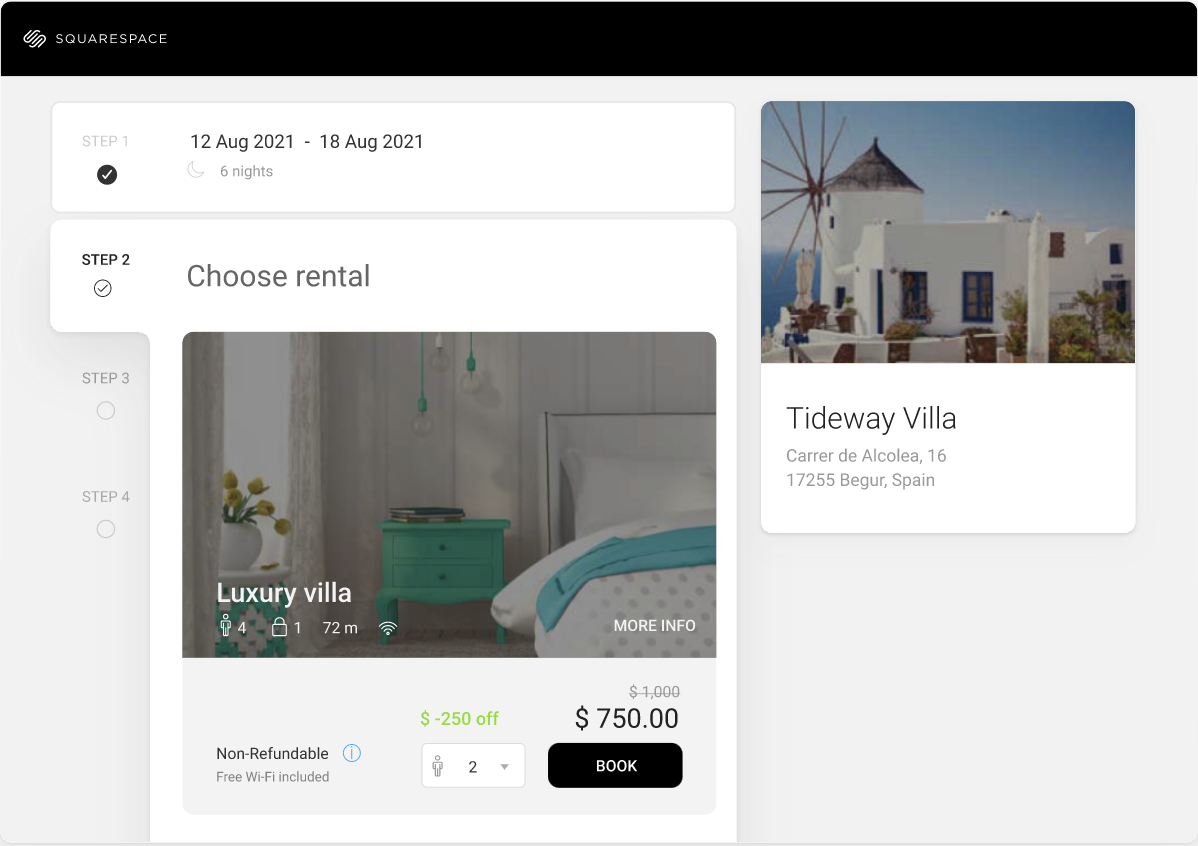
10 Best Squarespace Airbnb & Vacation Rental Templates (2025)
"If you're looking for the best Squarespace Airbnb template, short-term rental website template, or a Squarespace accommodation website, this guide has you covered. Whether you manage a vacation rental, boutique hotel, or serviced apartment, having a professional website helps attract more guests and secure direct bookings. In this guide, we’ll explore the top Squarespace templates for vacation rentals, including built-in and third-party options that help you create a stunning, high-converting rental website.
1. Suffolk

Suffolk is designed for boutique hotels and bed & breakfasts, making it a great option for vacation rental properties. With its clean layout and customizable features, you can easily modify this template to showcase your rental properties and provide essential information for potential guests.
2. Cailles

Cailles is designed for real estate agents and brokers to showcase their listings. You can easily adapt this template to display multiple vacation rental properties or focus on a single property.
3. Palermo
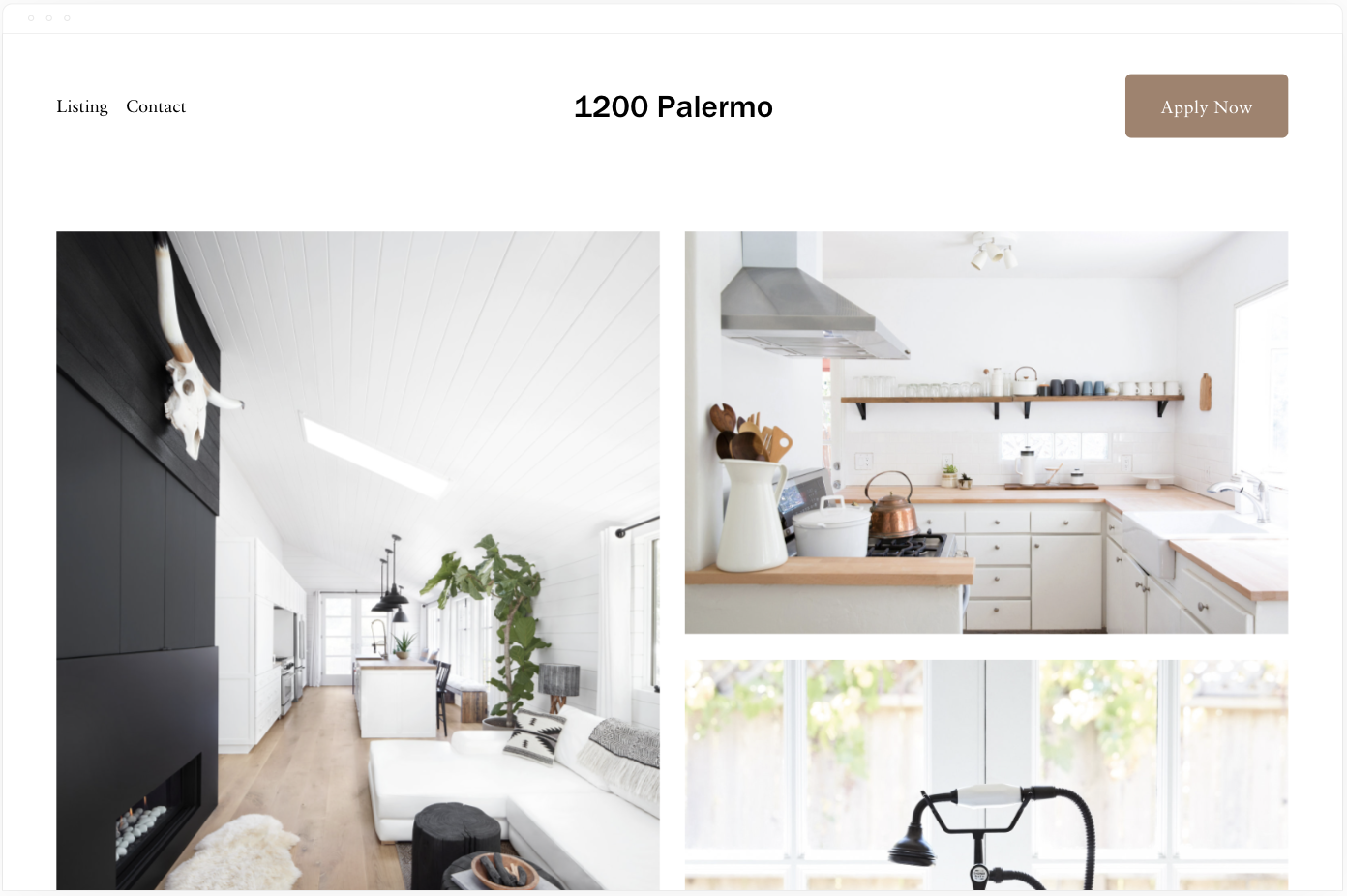
Palermo is another real estate listing template that can be adapted for vacation rental businesses. With its clean design and customizable features, you can create a website that highlights your property and provides all the necessary information for potential guests.
4. Hidano
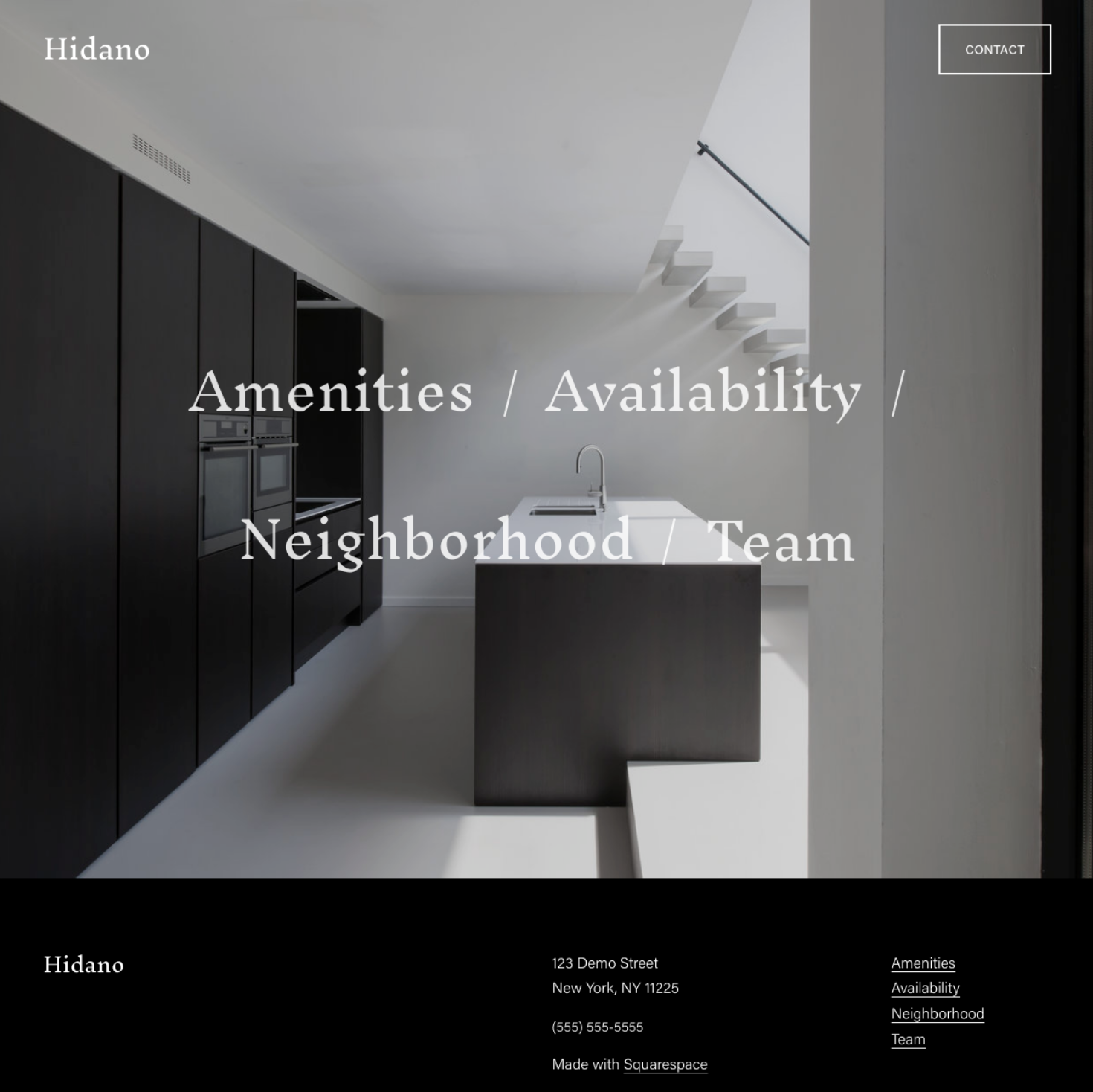
This template features a full-screen hero image and a minimalistic layout, suitable for showcasing vacation rentals with high-quality photography and detailed descriptions.
Third-Party Squarespace Vacation Rental Templates
These are paid templates, designed by Squarespace website designers.
1. Sojourner Template

Sojourner is a bright and inviting StoryBrand-ready website template designed for businesses in the travel or short-term rental industry. With its large images and warm patterns, this template provides a simple, modern feel that helps set your site apart and engage visitors.
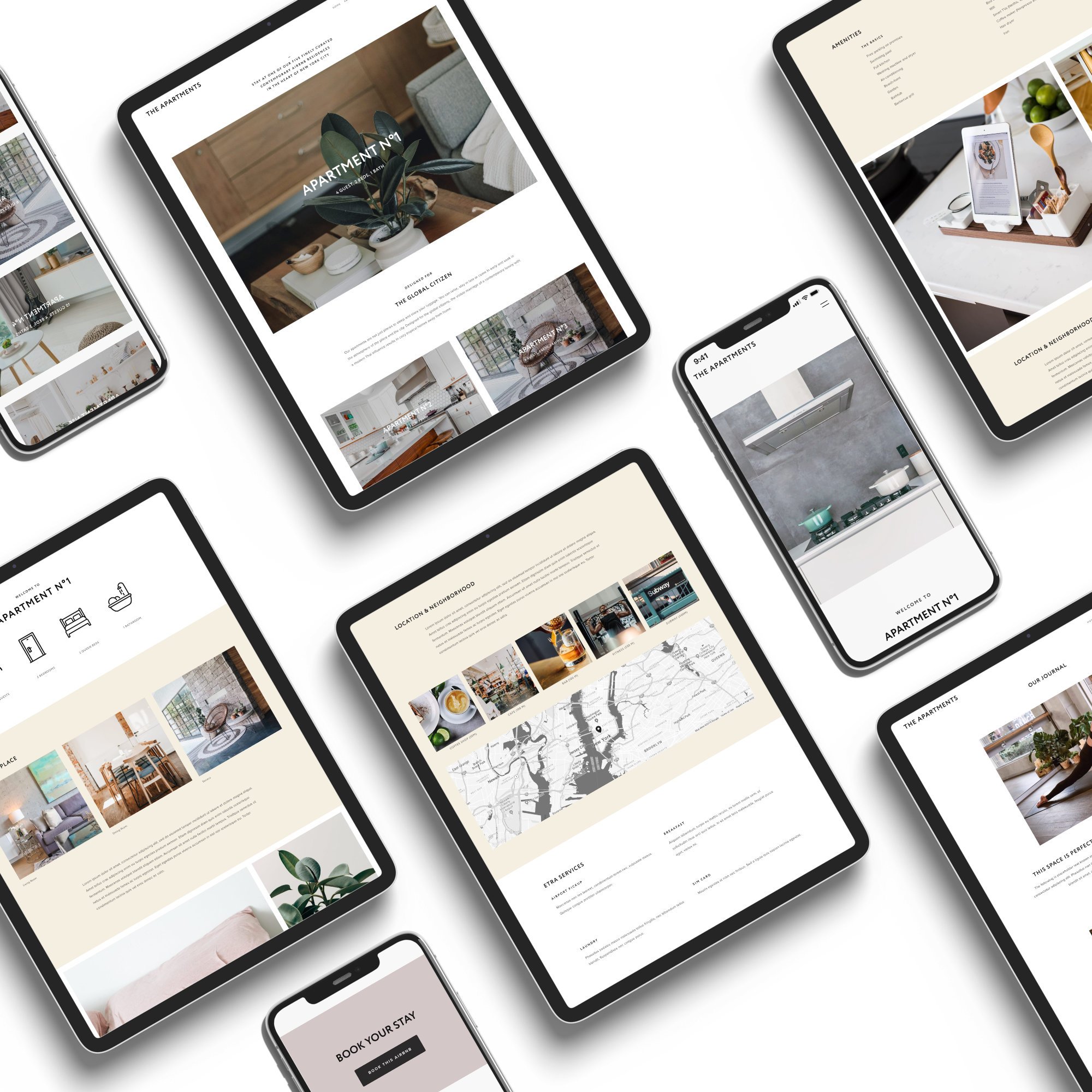
The Apartments is a clean, modern template designed for vacation rental home and Airbnb owners. With its customizable features, you can create a website that beautifully presents your accommodation options to discerning travelers.
3. Exurban

Exurban is a modern, strategic, and clean Squarespace Fluid Engine Template designed for service-based businesses, including vacation rentals. With its structured layout, use of galleries and videos, and calls to action, this template is perfect for a refined and modern brand.
4. Miso

Miso is a simple and elegant Squarespace template that can be easily customized to suit your vacation rental business. With its clean design and easy-to-use features, you can create a stunning website that showcases your properties and provides all the necessary information for potential guests.

North Pine Cabin is a fully-customizable Squarespace template designed specifically for cabin rentals, Airbnbs, and other vacation rental businesses. Create a beautiful website for your vacation rental property quickly and easily.
6. The Marfa

The Marfa is a unique and stylish website template for short-term rentals that will make your home stand out. With its cool design and easy-to-customize features, this template is perfect for any Airbnb or short-term rental business.
7. Atlas

Atlas is a strategic Squarespace template designed specifically for seasonal rentals. With its minimal yet robust layout, this template offers 6 custom page layouts to help you grow your bookings. Wind & Salt will customize your content in the template, and it also includes a fully integrated booking system.
Looking for more booking functionality?
Lodgify's vacation rental website templates effectively convert visitors into bookings, catering to properties of all types and sizes. These high-quality and customizable templates are tailored for the short-term rental industry, ensuring a professional and visually appealing design that showcases property information, rates, availability, and amenities.
With no technical experience needed, users can quickly create a website with a reservation calendar and booking form. In addition, the templates are optimized for SEO and mobile devices, ensuring easy discoverability and navigation across devices. Choose a Lodgify template to simplify the website-building process, enhance your brand, and increase bookings for your vacation rental properties.

Whether you choose a built-in Squarespace template or a third-party template, the key to creating a successful vacation rental website is customization. By adapting these templates to showcase your properties, provide essential information, and create a seamless user experience, you can attract potential guests and grow your vacation rental business.