SQSPThemes Case Study
How a $500 Squarespace Project Became a Million-Dollar Plugin Business
A small Squarespace project revealed a repeatable problem. That problem became a plugin. That plugin became a business.
In 2017, I took on a Squarespace project for $500.
Nothing about it looked special.
It was a normal ecommerce request sent through SQSPThemes.com. A basic site that needed a short list of Squarespace tweaks: make the homepage background image rotate, add a better size-chart pop-up modal, and adjust the mobile navigation layout.
That was it.
A normal inquiry. A short list of changes. A small project with a hard ceiling.
At the time, I was freelancing and doing a little bit of everything: design, development, marketing, strategy, whatever the work required.
I had skills, but I did not have leverage.
Every month still felt like starting over. A client says yes, and you can breathe. A client says no, and the whole month gets tighter.
Custom work can pay you, but it can also keep resetting the game.
I wanted work that could keep creating value after the project was over.
I wanted to build something once and let it keep working.
My private goal was simple: $10,000 a month from digital products.
I did not know how I would get there.
Then this $500 project opened a door I did not even know I was standing in front of.
More than $1M in revenue from a plugin business that started inside one client request.
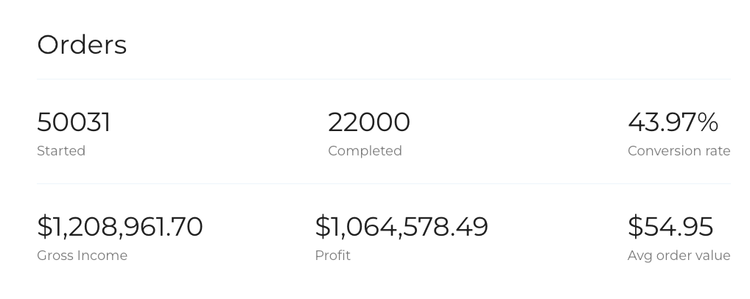 From one small Squarespace project to more than $1M in revenue.
The request that changed everything
The scope was complete. Then the real signal showed up.
The baseline project was finished and ready to launch.
Then the client reached back out with an extra request.
They wanted the main product image to change automatically when a customer selected a different color option.
A simple request on the surface.
If you have built enough Squarespace sites, you know what lives inside a request like that.
The client sees the outcome. Squarespace has its limits. You stand in the middle, trying to translate what should happen into something that actually works.
Most of the time, that kind of code disappears back into the project.
You solve it, the client is happy, the site launches, and everyone moves on.
This time, the problem stayed with me.
It was not just that this client needed it.
I knew other Squarespace users and designers would run into the same thing.
I wanted to reuse the solution.
That was the first real signal.
A short list of Squarespace tweaks. A $500 project. A normal client request.
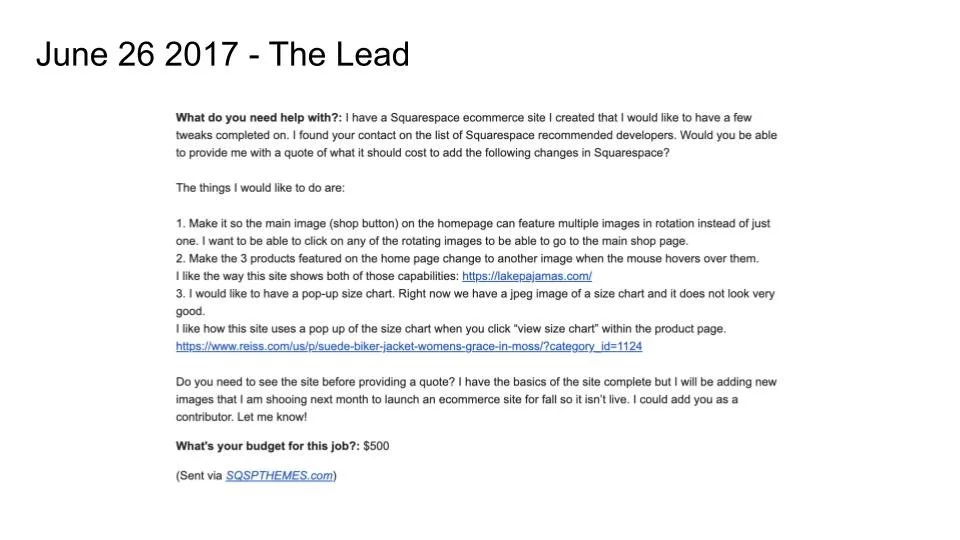 The project looked ordinary at first. The value was hiding inside what repeated.
The plugin moment
I could see the market. He could make the code work.
I messaged a developer I trusted.
He could make the code work.
That mattered because I had spent years trying to do too much myself.
I could see the client problem, the Squarespace market, and how designers searched, compared options, and asked around for help.
He could build the technical solution.
I could see where that solution needed to go.
I asked him how I could license the code from him so I could use it on future client builds.
“Do you mean like a plugin?” he asked.
“Yeah. Plugins,” I said.
“Do you think selling this kind of plugin would be profitable?”
I did not hesitate.
I was running a Facebook community of almost 1,000 Squarespace users, and I watched people run into these kinds of problems all the time.
The market was not imaginary.
It was already talking through client requests, group threads, support questions, search terms, and small moments of frustration.
A designer would get stuck between what a client expected and what Squarespace made easy.
I was close enough to hear it.
A week later, we launched our first plugin.
The asset was not only the code
The money was hiding in the pattern the project revealed.
The code had to work.
The plugin had to do what we said it would do.
But the business did not appear simply because the code existed.
The business appeared because a useful solution had a clear path to the people who already needed it.
That is what I had been missing in custom client work.
A client asks for a fix. You solve it. The code stays inside that one site. Then you move on and start again.
This $500 project forced me to look closer.
Maybe the value was not only in doing the work.
Maybe the value was in noticing what the work was showing me.
Hidden assets rarely announce themselves.
They usually show up as something familiar: a question you keep answering, a custom fix you keep making, a comparison you keep explaining, or a result that keeps happening in your best projects.
One client needed a fix.
But the need was bigger than one client.
Once I saw that, the project stopped being an isolated job.
It became a clue.
The product was only the beginning
Once the plugin existed, the real work was building the path to it.
A lot of useful assets begin as a practical fix for a real person.
Solved once. Recognized. Packaged.
Once the plugin existed, I had to trace the path backward from the person who needed it.
What would someone search before they knew our plugin existed?
What words would a designer use while trying to explain this Squarespace limitation to a client?
What would make the result obvious enough to trust?
What would help them after purchase so the solution actually worked?
That became the work.
The name mattered because people needed to recognize the solution.
The page mattered because it had to meet someone in the middle of their search.
The demo mattered because people needed to see the outcome.
The documentation mattered because the purchase was not the finish line.
Support mattered because every question showed us where the path still had friction.
We were not just selling code.
We were making it easier for someone with a real Squarespace problem to find the solution, understand it, trust it, buy it, and get relief from it.
The plugin solved the problem.
The path around the plugin carried it to the market.
I was figuring this out while the business was moving.
But the core lesson became clear:
A client project ends.
A product path compounds.
The first proof
The first six months brought in $10,000.
Less than two weeks after closing that client project, I sent a simple email announcing the new plugins to people already close to the problem.
No giant campaign.
No elaborate funnel.
Just a direct note to a market I had been listening to for years.
By the end of 2017, that first experiment had brought in $10,000.
It was not life-changing money yet, but it proved something real.
The revenue arrived without custom proposals, discovery calls, or manual scope reviews.
Every sale was proof that someone else had the same problem.
Proof that the page explained the value clearly enough.
Proof that the solution had a path to demand.
That changed how I looked at client work.
It stopped looking like one-off delivery.
It started looking like a field full of signals.
The first six months proved the client fix could become a product path.
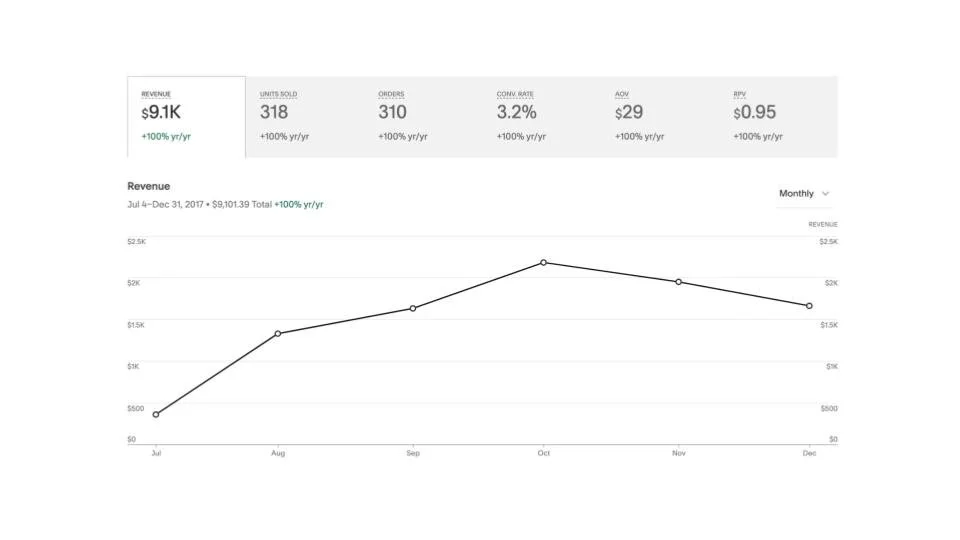 The numbers were still early, but the pattern was no longer theoretical.
Staying close enough to hear the market
The next products came from listening to what kept showing up.
For the next two years, I kept applying the same pattern.
I paid attention to where Squarespace created friction, which problems kept showing up in support, and which searches had weak answers.
Some product ideas looked interesting at first, then disappeared.
Some were useful, but not urgent.
Some were hard to explain in a way that made someone care quickly.
Others kept returning.
Those were the ones that mattered.
A customer question showed where a landing page was unclear.
A support issue revealed where documentation needed to be stronger.
A search term gave us the exact language people were already using.
That rhythm built the business.
Over time, the plugin business crossed more than $1 million in total revenue and supported over 20,000 freelancers, designers, and store owners.
It did not come from inventing random ideas in isolation.
It came from recognizing the value inside work that was already happening, then building a clearer path from that value to the people already looking for it.
The work behind the work
This is the same pattern I now help Squarespace entrepreneurs see in their own business.
I have spent years inside the Squarespace ecosystem: building tools, selling products, supporting customers, teaching designers, and listening closely to where the work keeps getting stuck.
I have seen how often the next opportunity is already present inside the business.
It may be hiding inside a repeated client question, a better service page, a case study, a guide, a diagnostic, a productized offer, or a follow-up path you have not built yet.
The work is not to invent something from thin air.
The work is to look at what is already happening with enough care to see the value inside it.
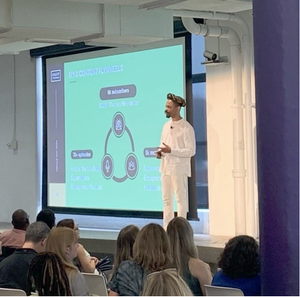
Your version will have its own shape
The lesson is not that every Squarespace designer should build plugins.
Your version may look completely different.
Maybe your business needs a clearer service page.
Maybe there is a project that should have become a case study months ago.
Maybe there is a repeated client question that should become a guide, a page, a workshop, or a paid session.
Maybe there is proof sitting quietly in your portfolio that should be helping someone trust you before they ever get on a call.
The form depends on your business.
The place to look is usually familiar.
Look at the questions clients keep asking.
Look at the fixes you keep repeating.
Look at the projects that created the most trust.
Look at the explanations you keep giving on calls.
Look at the work that feels obvious to you now.
A lot of value hides there.
That is why it can be hard to see from the inside.
Find your hidden asset
Your next revenue opportunity may already live inside work you have completed.
A $500 client problem became a clue. The clue became a plugin. The plugin became a process. The process became a business.
Your version may already be sitting inside something you have solved, customized, explained, or repeated.
If you want another set of eyes on your work, this is where I would start:
Squarespace Hidden Asset Review
A focused, 1-on-1 session where we look at one project, repeated client question, product idea, service, or pattern inside your Squarespace business and look for the asset hiding inside it.
You’ll leave with a clearer read on what the signal may be, what form it could take, and the next practical step to test it.
Book the Hidden Asset Review