Why You’re Capped (Even If You’re Busy)

IIf your revenue depends on you saying yes to endless next things, you’ll hit a ceiling.

Especially when your highest-value work is buried under small requests.

Most of the time, the bottleneck isn’t marketing yet. It isn’t leverage yet either.

It’s misalignment.

Your calendar is full of work that meets one or two of these criteria, but rarely all three:

Truth — Love — Value

When all three are present, the business starts to build.
When one is missing, you plateau.

1. Truth — What are you actually willing to keep giving?

A plateau usually shows up the moment your work stops being true.

Not “true” in some abstract sense.

True as in: you can keep doing it without resenting your life.

This is usually where people get stuck becoming the default yes-person.

Tweaks.
Template edits.
Quick questions.
Tiny retainers that never end.

It’s valid work.
It’s just not always sustainable work.

So ask the question plainly:

What am I doing right now that I can do, but don’t want to keep doing?

If your growth depends on continuing to give that thing, you’re going to cap out.

Not because you’re weak.
Because capacity has edges.

Truth is where capacity lives.
And capacity is where the ceiling comes from.

2. Love — What are you actually devoted to?

When I say love, I don’t mean vague passion.

I mean devotion.

What kind of work do you return to even when nobody is clapping?
What kind of work makes you feel more like yourself after you do it?

This matters because devotion regenerates.

You may get tired.
You may need a break.
But you don’t go flat.

When the work isn’t connected to anything you care about, everything starts requiring discipline.

Discipline matters.
It just isn’t infinite.

So ask:

What work do I want to get better at for the next decade?

If you can’t answer that, you’ll keep rebuilding the business every year from scratch.

If you can answer it, you can start building something that compounds.

3. Value — Where does the market already pay for the change you create?

This is the part people miss.

Your most valuable work is often not the work you’re most visible for.

So you end up known for the work that keeps you busy, not the work that actually moves things.

You end up marketing the generic version of yourself while your best outcomes stay buried inside a list of services.

Value lives in the change.

Not “I make nice websites.”

More like:

  • you reduce confusion

  • you reduce risk

  • you make something easier to manage

  • you help the business look credible

  • you help a team move faster

  • you help people make better decisions

  • you make the offer clearer

  • you solve something they were quietly stuck on

That’s the work people remember.
That’s the work they thank you for.
That’s usually the work they pay most for.

So ask:

What do people thank me for most?
What kind of relief do I reliably create?

Then ask the harder question:

Is that the first thing my business says?

If it isn’t, you’ve probably found the bottleneck.

Why people stay stuck longer than they need to

In a job, eventually somebody promotes you.

New role.
New expectations.
New pay.

In your own business, nobody does that for you.

Nobody taps you on the shoulder and says:

You’ve outgrown that version of your service.

So a lot of people stay in the role that helped them survive the early years.

They keep selling what they can do.
They never reposition around what they’re most valuable doing.

That’s how you end up with a full calendar and a flat year.

Doubling usually isn’t a hustle season.

It’s a role change.

It’s you promoting yourself inside your own business.

A 10-minute alignment audit

Open a doc and answer these in one sitting:

Truth: What can I no longer sustainably give?
Love: What work regenerates me and I want to keep getting better at?
Value: What change do people already pay me for — and thank me for?

If your best work stays hidden, your revenue usually does too.

And if your business is still built around what you’re willing to do instead of what you’re most valuable doing, that’s probably the ceiling.

If that hit something, pay attention.

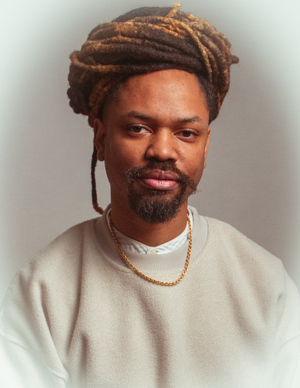
Omari Harebin

Omari Harebin is the founder of SQSPThemes.com — a curated hub of tools, templates, and mentorship for Squarespace designers and developers. With over a decade in the ecosystem and nearly $2M in digital product sales, he helps creatives turn client work into scalable assets and more freedom in their business.

https://www.sqspthemes.com
Previous
Previous

How do you actually double your revenue once you've hit a ceiling?

Next
Next

Why Your Best Work Stays Hidden (and How to Get it Seen)