Squarespace already has built-in product reviews.
Customers can leave written reviews and star ratings, and Squarespace will even send them an email automatically asking for feedback.
So why would you pay for a third-party app to do something Squarespace already does?
That was my first question when the folks at Fera reached out to tell me they'd recently launched a Squarespace integration.
I've recommended third-party review apps in the past, including Wiremo. But that was before Squarespace introduced its own review system.
So I decided to take another look.
And after going through Squarespace's documentation, testing Fera, and reading discussions from store owners, I found quite a few limitations worth knowing about.
Especially if you're planning to make customer reviews an important part of your business.
What Squarespace already gives you
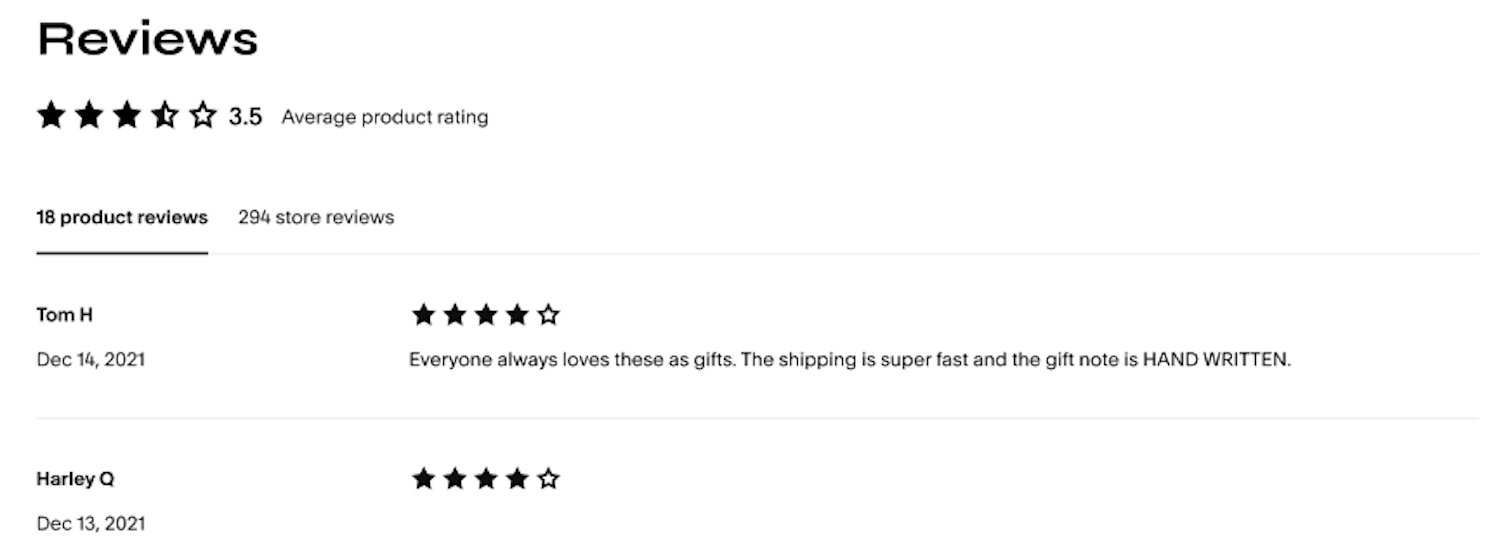
Squarespace's native product reviews are pretty straightforward.
Customers who purchase from your store can leave a written review and a rating between one and five stars.
You can customize the review request email, moderate which reviews appear publicly, and display them on your product pages.
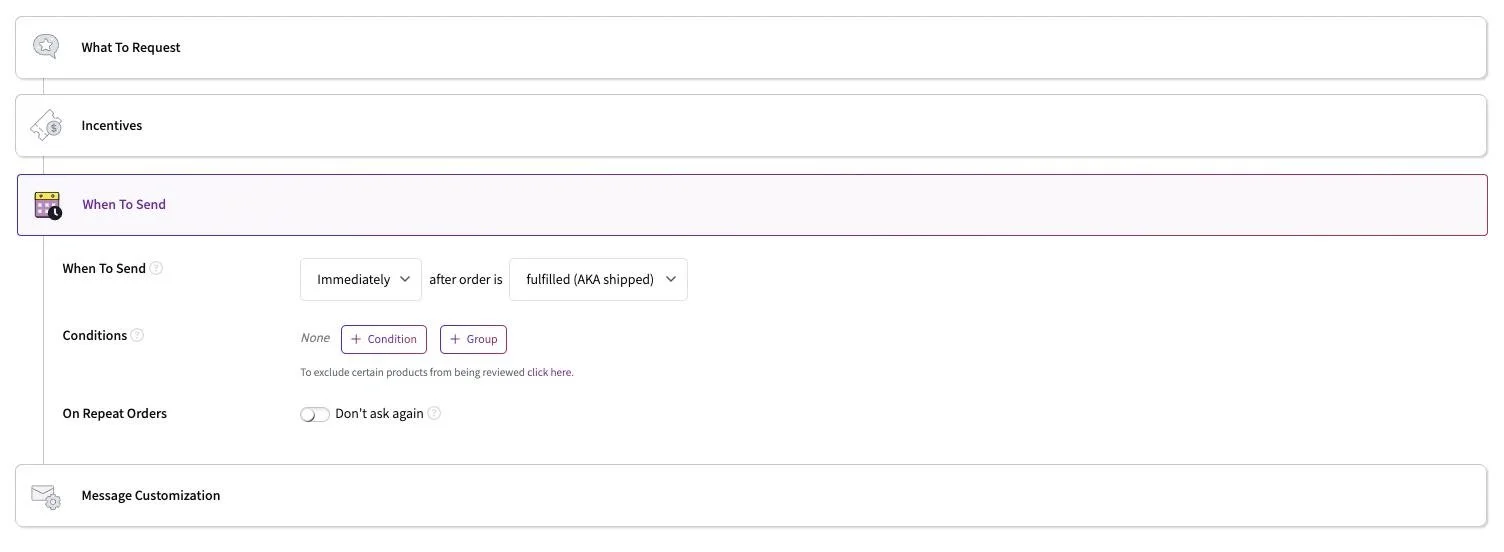
Squarespace automatically sends review requests 14 days after an order is fulfilled.
And you don't have to subscribe to another service or install anything to use it.
For a lot of stores, this might be everything you need.
But there are a few situations where I'd consider using something else.
1. When you need more control over when reviews are requested
Let's say you sell sewing patterns.
Your customers might take several weeks to finish their projects before they're ready to leave a meaningful review.
But Squarespace sends review requests 14 days after fulfillment.
You can't change that.
I came across an actual Squarespace Forum discussion from a merchant who sells sewing patterns and was experiencing exactly this problem.
They explained that customers often need a month or longer to finish making something.
So a review request after 14 days was either going to be ignored or result in feedback about the delivery rather than the product.
They eventually switched to HelpfulCrowd, a third-party reviews app that let them choose when requests would be sent.
And that's one of the biggest differences between Squarespace's native reviews and dedicated platforms.
With Fera, for example, you can decide how long to wait before sending a review request.
You can also configure conditions based on order or customer information.
That means you have more control over when customers are asked to share their experiences.
2. When you want to follow up with customers who don't leave reviews
Here's another limitation.
Squarespace sends one review request email per customer order.
If the customer doesn't respond, you can't have the native system automatically send them a reminder.
And you can't manually resend the review request either.
This becomes more important when you're consistently making sales and want to develop a reliable process for collecting feedback.
Fera allows you to send a follow-up message to customers who haven't submitted a review.
You can configure when that reminder goes out.
It also provides information about why a particular order didn't receive a review request.
So if you're wondering why customers aren't reviewing their purchases, you have more information to work with.
3. When you want reviews from people who've already purchased
Imagine you've been running your Squarespace store for two years.
You've sold hundreds of products, and now you're ready to start collecting customer reviews.
You turn on Squarespace's review automation.
Unfortunately, Squarespace only goes back as far as orders fulfilled within the previous 14 days.
It won't automatically contact everyone who purchased before that.
And customers only have 120 days from their purchase to submit a native review.
This is another situation where a dedicated reviews app can be useful.
Fera lets you create one-time campaigns to request feedback from existing customers.
You can invite past customers to share product reviews, photos, or videos.
Of course, you'll want to make sure you're contacting customers appropriately and complying with applicable email marketing requirements.
But the ability to reach an existing customer base is a meaningful difference.
4. When you want to respond to customer reviews
This one surprised me.
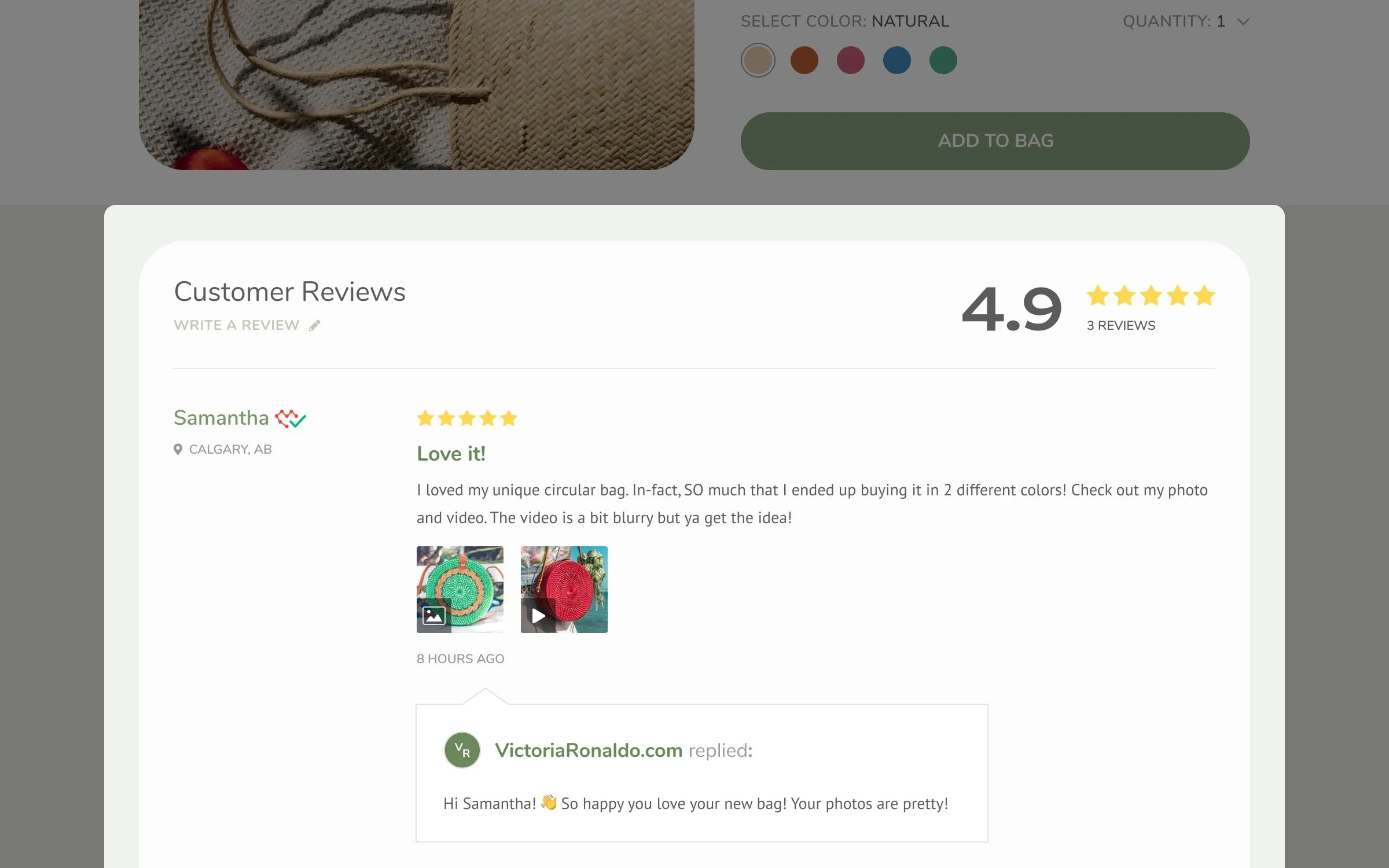
Squarespace doesn't let merchants publicly respond to product reviews.
Let's say someone leaves a two-star review because an item arrived damaged.
You contact the customer, replace the product, and resolve the problem.
Naturally, you'd want to respond to their review so future customers can see how you handled the situation.
But Squarespace doesn't allow that.
You can email the customer privately, but you can't leave a public reply beneath their review.
And the customer can't edit or delete their original review either.
With Fera, merchants can publicly respond to customer reviews.
You can also invite a customer to update a review after their concerns have been addressed.
I think that's a pretty significant difference.
Customer reviews aren't always the end of a conversation.
Sometimes they're the beginning of one.
And having a way to show prospective customers how you respond to feedback can be just as valuable as the review itself.
5. When you want customers to share photos and videos
Squarespace's native review system supports written reviews and star ratings.
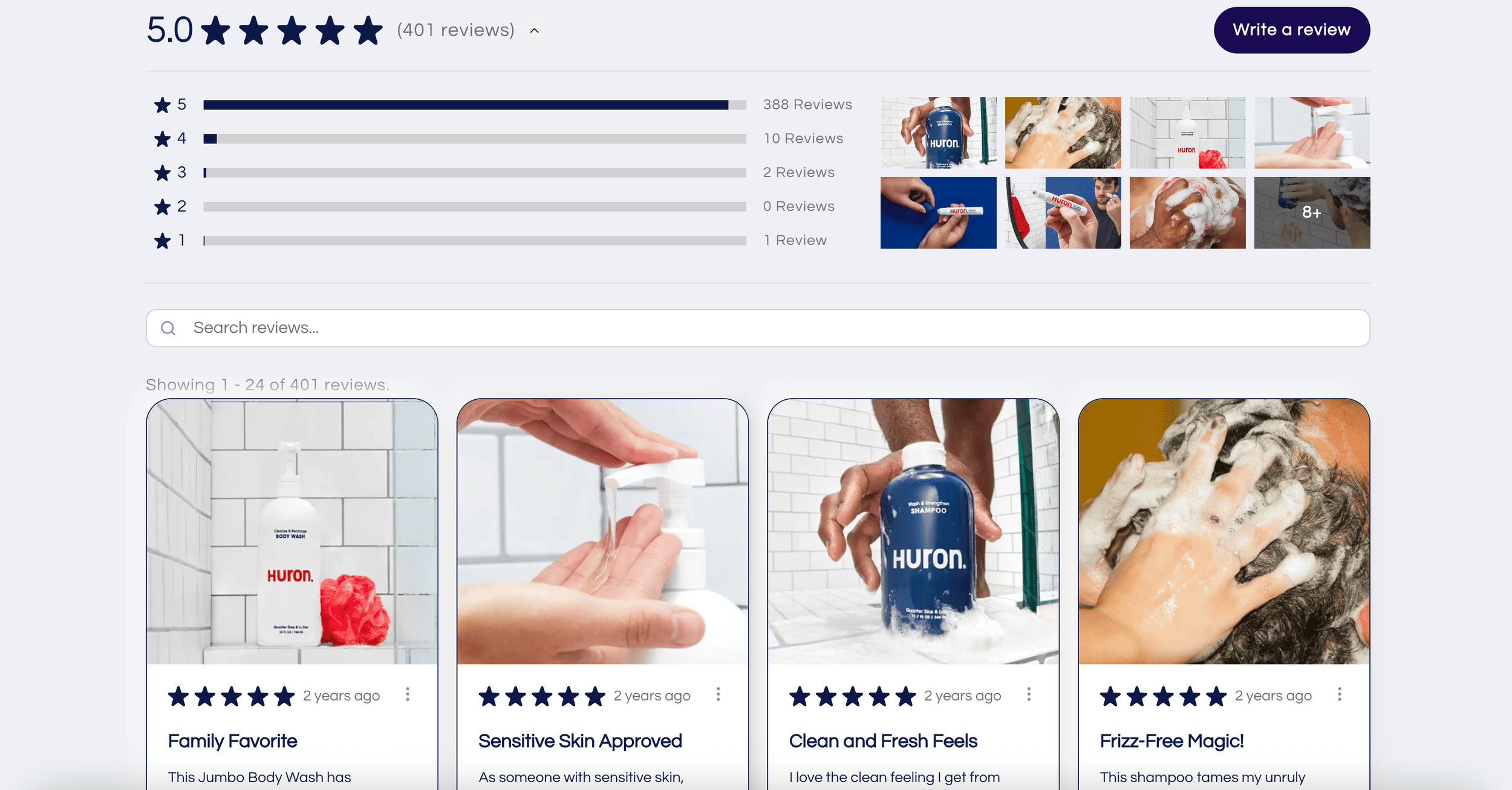
But customers can't upload photos or videos with their reviews.
Depending on what you're selling, that might matter quite a bit.
Think about clothing, furniture, handmade products, or anything where seeing the product in a real-world setting would help someone make a purchasing decision.
A customer photo might answer questions that your product description doesn't.
Fera lets customers submit photos and videos alongside their reviews.
You can then display that content through customizable widgets, including photo galleries and carousels.
And you can use those widgets in places beyond the standard product review section.
For businesses that depend on visual presentation, that opens up some interesting possibilities.
6. When you want more control over where reviews appear
Squarespace displays its native product reviews on product detail pages.
You have some control over which reviews appear, but the layout and placement options are limited.
What if you want to feature customer reviews on your homepage?
Or display a gallery of customers using your products?
Or add a collection of reviews to a landing page?
You could create those sections manually, but that creates additional work as new reviews come in.
Fera provides customizable widgets for displaying product reviews, star ratings, and customer photos and videos in different parts of your website.
You can choose from different layouts, customize their appearance, and select a base theme that matches your website's design.
7. When you want to keep your reviews if you leave Squarespace
Squarespace doesn't let you export its native product reviews.
There's no option to download them as a CSV.
You also can't transfer those reviews to another Squarespace website.
So imagine spending several years collecting hundreds of customer reviews.
Then one day you decide to move your store to Shopify.
You can export your products, but you can't simply take your native product review history with you.
Fera lets merchants export reviews collected through its platform.
So if you change ecommerce platforms or review providers later, you have a way to preserve that data.
There's an important catch, though.
Installing Fera doesn't automatically give you a way to export reviews you've already collected through Squarespace.
Those reviews are still subject to Squarespace's limitations.
This is something I'd think about before committing to a review system, rather than after you've spent years collecting customer feedback.
What else can Fera do?
There are a few additional features I discovered while setting up Fera that are worth mentioning.
Multilingual review widgets. Fera supports multiple languages for its customer-facing review forms, buttons, and widget text. You can also customize translations to better match your brand's language. This doesn't automatically translate the customer-written reviews themselves.
Product questions and answers. Fera offers Q&A widgets where shoppers can ask questions about individual products and merchants can publish answers. There are also widgets for general questions about the store.
Direct review links and QR codes. Instead of relying entirely on automated emails, you can share links to review forms. Fera also supports QR codes, which could be useful for packaging inserts, in-person sales, or other customer interactions. Reviews submitted this way aren't automatically purchase-verified.
Verified customer reviews. Fera can identify reviews associated with verified purchases and distinguish them from other submissions.
Fera also offers AI-assisted review management on certain plans, including moderation and suggested replies.
And there's one other feature worth watching: review incentives.
Fera advertises rewards for review submissions, but its automated discount-code and cashback features are currently documented as Shopify-only. I'd confirm what's supported on Squarespace before making those part of your review-collection strategy.
Not every store needs these features. But they give you a better idea of what's available beyond collecting a star rating and a few sentences of feedback.
So, should you use Fera instead of Squarespace's native reviews?
It depends on what you need your review system to do.
If you're running a relatively simple store and just want customers to leave ratings and written feedback, I'd probably start with Squarespace's native system.
It's already included, it's easy to enable, and it does the basics.
But if you want more control over collecting, managing, and displaying customer feedback, there are some compelling reasons to consider a dedicated app.
Here's a quick comparison.
| Feature | Squarespace Native | Fera |
|---|---|---|
| Written reviews and star ratings | Yes | Yes |
| Automated review requests | Yes | Yes |
| Custom request timing | No | Yes |
| Follow-up reminders | No | Yes |
| Request reviews from past customers | Limited to recent orders | Yes, through one-time campaigns |
| Public replies to reviews | No | Yes |
| Customer review updates | No | Yes, for eligible Fera reviews |
| Photo and video reviews | No | Yes |
| Custom review galleries | No | Yes |
| Export reviews | No | Yes, for reviews in Fera |
Fera isn't the only alternative. HelpfulCrowd and Wiremo also provide more advanced review functionality for Squarespace.
But Fera is one of the newer options, and I think its combination of review collection, management, and display features makes it worth considering.
It starts at $9 per month, with larger plans available as your store grows. Features and usage allowances vary by plan.
You'll also need a Squarespace plan that supports Code Injection to install its review widgets. That includes Core, Plus, Advanced, and certain legacy plans.
One thing I'd consider before choosing
There's something I want to emphasize, especially for designers building ecommerce websites for clients.
It's easy to choose a review system based on what your client needs today.
But I'd also think about what happens when their business grows.
Will they want to send review requests at different intervals?
Will they want customers to share photos?
Will they need to respond publicly to feedback?
Will they want their review forms in another language?
Will they eventually migrate their store?
These are much easier questions to answer before you've spent years collecting reviews in a system you can't export from.
Final thoughts
I'm glad Squarespace has a native product review system.
For many merchants, it removes the need to subscribe to another service just to collect customer feedback.
But having gone through the limitations and spent some time with Fera, I can see a compelling case for using a dedicated reviews app.
Particularly if you need more control over the feedback you're collecting and what you can do with it.
If that's where you are, Fera is worth taking a look at.
And if Squarespace's built-in reviews are already doing everything you need, keep using them.
Just understand the trade-offs before you've spent years collecting customer feedback you may eventually want to take elsewhere.